Custom Website vs Template for Small Businesses
5 MINUTES READ
13 May 2026
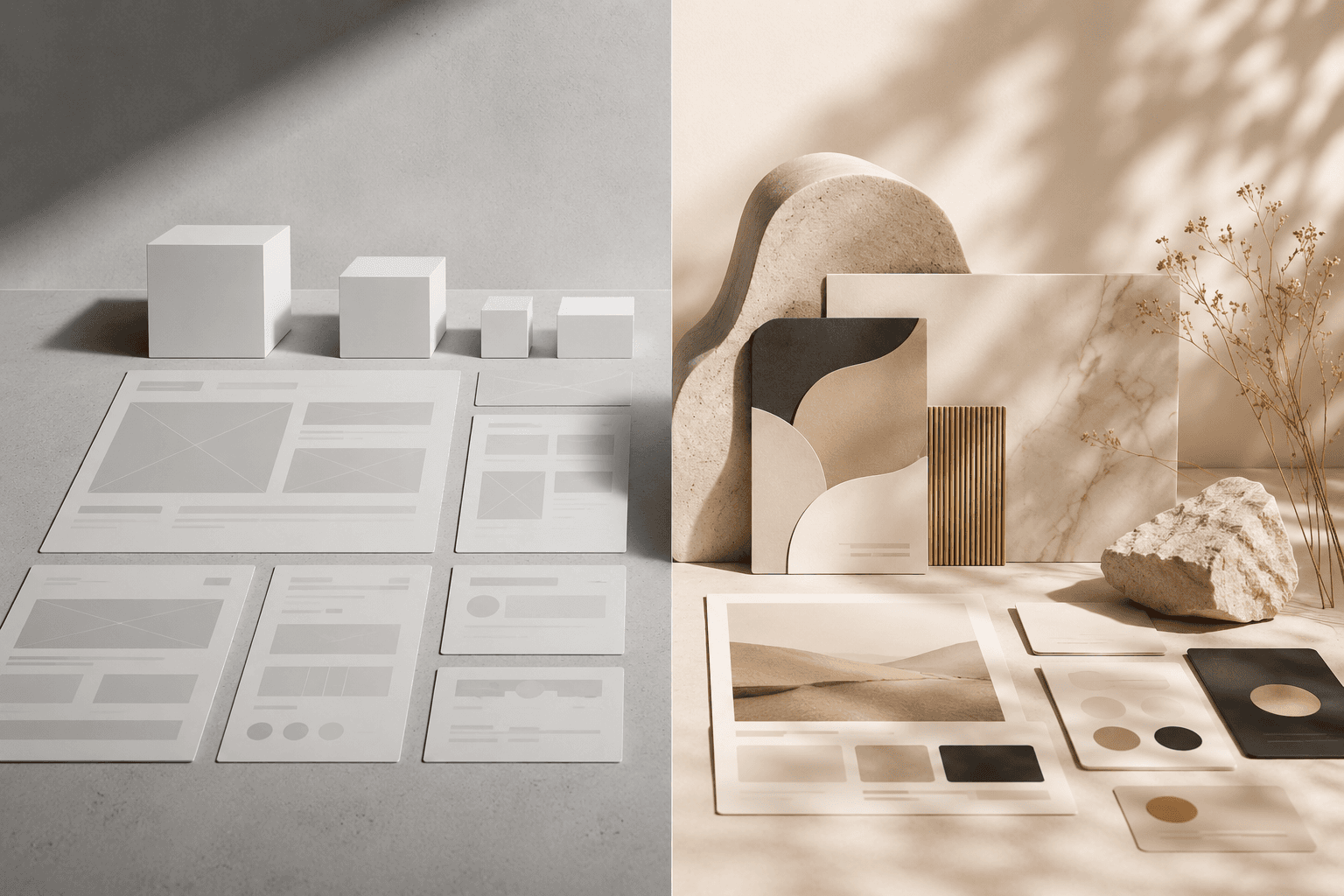
When thinking about the custom website vs template for small businesses debate, launching with a template often feels like the obvious choice. It is fast, affordable, and often enough to create an initial online presence. If you are a brand new business testing an idea or simply need a temporary landing page, a template web design can absolutely do the job. Not every company needs a fully bespoke solution from day one.
Custom Website vs Template Comparison at a Glance
If you're comparing custom website vs template solutions, the differences go far beyond upfront pricing alone. While template websites often look like the cheaper and faster option initially, long-term flexibility, branding, performance, and SEO potential can vary significantly. Much like the broader small business website cost conversation, the real value often becomes clearer when you look beyond the initial quote and compare what each approach actually offers over time.
Feature | Template Website | Custom Website |
|---|---|---|
Upfront cost | Lower initial investment, making templates appealing for businesses with tighter budgets | Higher upfront investment, but often better aligned with long-term business goals |
Launch speed | Faster to launch since the design framework already exists | Longer build time due to strategy, design, revisions, and custom development |
Design flexibility | Limited to the structure and options allowed by the template | Fully tailored around your brand, messaging, and business objectives |
Brand uniqueness | Can look polished, but often feels generic and similar to competing websites | Built specifically to create stronger differentiation and brand credibility |
SEO potential | Can support basic SEO, but structural limitations may restrict optimisation | Stronger SEO foundations with greater control over structure, performance, and content hierarchy |
Performance optimisation | Depends heavily on template quality and included features, which may add unnecessary weight | Performance can be intentionally optimised around your exact website requirements |
Scalability | Adding new features or expanding content can become restrictive over time | Designed with future growth, additional services, and content expansion in mind |
User experience (UX) | General-purpose layouts designed for broad audiences | User journeys intentionally planned around your ideal customers and conversion goals |
Ongoing flexibility | Major design or structural changes may require workarounds or rebuilding | Easier to evolve as your business, messaging, or service offerings change |
Long-term value | Practical for simple short-term needs or early-stage businesses | Often delivers stronger long-term ROI for growth-focused businesses |
A template website can be the right choice for businesses that need speed, simplicity, and a lower upfront investment. However, when long-term flexibility, stronger SEO performance, and strategic growth matter, the custom website vs template decision often shifts in favour of a more tailored solution.
Where Template Websites Start to Fall Short?
That said, the limitations tend to appear quickly once growth becomes the goal. Many templates are designed to appeal to the widest possible audience, which means they are often generic by nature. They may look polished at first glance, but they rarely reflect what makes a specific business unique. For companies competing in crowded industries, blending in online can be a real disadvantage.
This is where small business custom web design becomes more important. A website should not simply exist as a digital brochure. It should communicate trust, guide visitors clearly, and support business objectives. Whether the goal is generating enquiries, booking consultations, or building credibility, structure matters.
Another common issue is flexibility. Businesses evolve, services expand, messaging changes, and suddenly the original template no longer supports what the company actually needs. Making edits can become frustrating, especially when layouts are rigid or certain design elements cannot be adapted without workarounds.
Performance can also become a concern. Some template-heavy websites include unnecessary code, bloated plugins, or design choices that impact loading speed. That directly affects user experience and can also weaken search engine optimisation efforts over time. A visually attractive website that loads slowly or performs poorly on mobile can quietly cost opportunities.
Templates are not inherently bad. They simply serve a different purpose. For businesses in early validation mode, they can be practical. But companies investing in long-term growth often find themselves outgrowing them much sooner than expected, particularly when stronger branding, flexibility, and more strategic custom web design services become necessary.
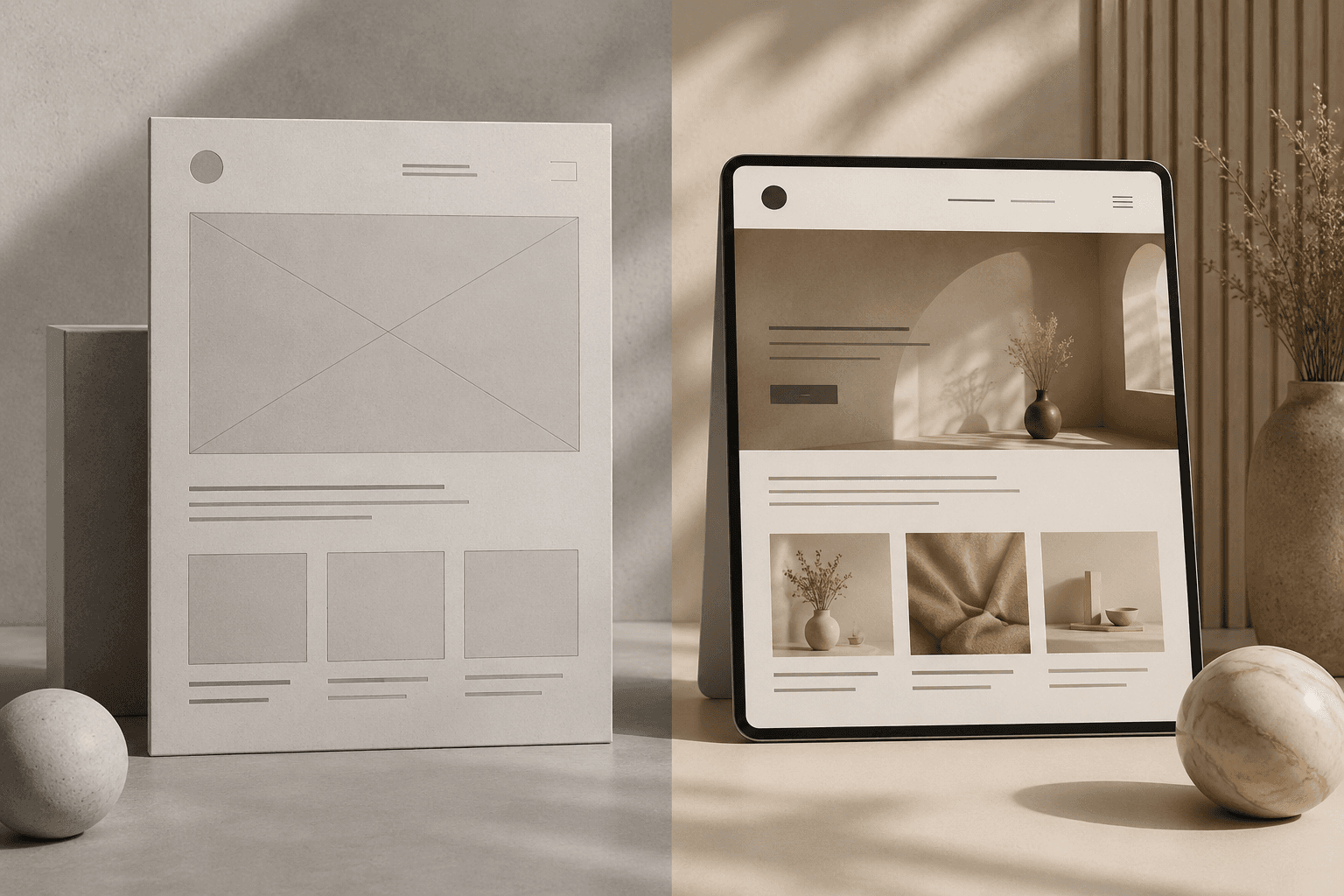
A custom website becomes significantly more valuable when a business is no longer simply trying to exist online, but actively trying to grow and reach wider audiences. That distinction matters. Businesses focused on attracting leads, building authority, or standing apart from competitors usually benefit from a more intentional digital foundation.
That is often the turning point in the custom website vs template for small businesses conversation, because the decision becomes less about upfront cost and more about what the website actually needs to achieve. Good custom web design for small businesses is not simply about aesthetics. It is about creating an experience shaped around actual business goals. That includes how users navigate the site, where calls to action appear, how messaging is structured, and how trust is established throughout the journey.
A service-based business, for example, often needs more than a homepage and contact form. It may require dedicated service pages, expert SEO web design services, strategic internal linking, conversion-focused layouts, and room for future expansion. Generic templates are rarely built with that level of flexibility in mind.
Brand Perception & Discoverability
Brand perception also plays a major role. Small businesses often compete against larger or more established players, which makes first impressions critical. A professionally structured website can help communicate credibility immediately, even before a conversation begins. Visitors make assumptions quickly, and design quality often shapes those assumptions.
Then there is discoverability. Businesses that want visibility through Google need more than visual polish. Technical structure, page hierarchy, speed, mobile responsiveness, and content strategy all influence organic performance. Integrating search engine optimisation from the beginning creates a much stronger foundation than trying to retrofit it later, which is what custom web design services for small businesses offer.
This is why many growing brands eventually move toward more tailored website design services rather than relying on restrictive template systems. A website should support growth, not create friction.
Hidden Costs of Template Websites
At first glance, template websites often seem like the obvious winner in the custom website vs template debate because the upfront price is usually much lower. However, what many small businesses discover later is that the initial saving does not always reflect the true long-term cost once additional tools, limitations, and upgrade needs start to appear.
This is where the custom website vs template conversation becomes more nuanced. A template website may be perfectly practical for simple short-term needs, but businesses focused on growth often encounter hidden expenses that gradually reduce the cost advantage.
Premium apps and paid add-ons: Many template platforms require additional paid tools for features like advanced forms, booking systems, ecommerce functionality, email marketing, or design customisation. These monthly costs can add up surprisingly quickly.
Platform subscription fees: The initial website setup may seem affordable, but ongoing platform subscriptions are often unavoidable. Over several years, these recurring costs can become a meaningful long-term expense.
Design and functionality limitations: When a business outgrows a template’s built-in capabilities, workarounds or external developer support may become necessary. Simple changes can sometimes require far more effort than expected.
SEO constraints: While templates can support basic optimisation, structural limitations may make advanced SEO improvements more difficult. Businesses relying on search visibility may eventually need a more strategic rebuild.
Migration or redesign costs later: A business that starts with a template and later outgrows it may end up paying for a full small business website redesign, effectively turning the cheaper short-term option into a more expensive long-term path.
Who Should Invest in a Custom Website?
In the custom website vs template discussion, a custom website usually becomes the stronger investment once a business needs more than a simple online presence. While templates can work for early-stage projects or businesses with very straightforward requirements, growth-focused companies often need greater flexibility, stronger branding, and a website built around specific business objectives rather than generic layouts.
This is where the custom website vs template decision becomes less about upfront affordability and more about long-term performance. Businesses that rely on lead generation, search visibility, stronger user experience, or future scalability typically benefit far more from a tailored approach that can evolve alongside the business instead of creating limitations over time.
When Custom Web Design Becomes the Better Choice?
In the custom website vs template for small businesses discussion, a custom website often becomes the stronger choice once a business needs more than a simple online presence.
Multiple service offerings that require clear, dedicated pages
Stronger brand differentiation in a competitive market
More effective SEO web design services for long-term visibility
Conversion-focused web design layouts designed to generate enquiries or bookings
Greater flexibility for future growth, new services, or content expansion
A more polished digital presence that builds immediate trust
Ultimately, the custom website vs template for small businesses decision depends on your business stage, goals, and budget. A template may be perfectly reasonable in some scenarios. But when long-term positioning, lead generation, and stronger digital performance matter, investing in strategic small business web design usually becomes the smarter move.
Frequently Asked Questions
What is the difference between a template and a custom website?
The main difference in the custom website vs template discussion is flexibility. A template website uses a pre-designed structure that is adapted to your business, while a custom website is built specifically around your brand, goals, audience, and user experience requirements.
Is it better to build your own website or use a website builder?
It depends on your goals, budget, and technical experience. Website builders can be a practical solution for simple websites, while businesses focused on growth, branding, and lead generation often benefit from a more strategic approach that goes beyond basic website builder limitations.
What is a disadvantage of using templates in web design?
One of the biggest disadvantages is limited flexibility. Templates are designed for broad use cases, which can make it difficult to create a unique brand experience or adapt the website as business needs evolve over time.
Can a template website rank on Google?
Yes. In the custom website vs template comparison, both approaches can rank on Google when supported by quality content, technical SEO, and strong UX design. However, custom websites often provide greater flexibility for advanced optimisation and future SEO improvements.
Can a template slow down my site?
In some cases, yes. Certain templates include unnecessary code, features, or design elements that can affect loading speed. Performance depends largely on the quality of the template and how well it has been optimised.
Are template websites cheaper than custom websites?
Template websites generally have a lower upfront cost because much of the design and development work has already been completed. However, when comparing custom website vs template solutions over the long term, ongoing subscriptions, paid add-ons, and future redesign costs can reduce the overall cost difference.
BLOG