10 Small Business Website Mistakes That Cost You Customers
7 MINUTES READ
18 JULY

Small business website mistakes are one of the biggest reasons why a website fails to generate enquiries, even when it looks professional at first glance. We've worked with many business owners who invested time and money into their websites, only to wonder why visitors leave without getting in touch. In many cases, the problem isn't the business itself. It's a few overlooked issues that negatively affect user experience, search rankings, and conversions.
The good news is that most of these problems are relatively easy to fix. Whether you're planning a new small business web design project or improving your existing website, understanding the most common small business website mistakes can help you create a website that builds trust, attracts the right audience, and converts more visitors into customers.
Key Takeaways
Common website mistakes can reduce your search visibility, user trust, and conversion rate.
Slow loading speeds and poor mobile usability often drive potential customers away.
Weak calls to action can prevent visitors from taking the next step.
SEO, website maintenance, and high-quality content all contribute to better long-term performance.
Regular website reviews help identify issues before they start affecting your business.
Fixing a few key website mistakes can significantly improve lead generation and overall user experience.
Mistake 1: Slow Website Speed
One of the most common small business website mistakes is overlooking website speed. While a slow website may not seem like a major issue, it can significantly impact how visitors interact with your business. Most users expect pages to load almost instantly, and even a short delay can increase bounce rates and reduce the likelihood of someone making an enquiry or purchase. Website speed also plays an important role in search engine optimisation, meaning slower websites may struggle to rank well in Google search results.
If you've ever asked yourself, Why Is My Website So Slow?, the answer often comes down to a combination of large image files, poor-quality hosting, outdated plugins, or inefficient code. If your website takes too long to load, feels outdated, or delivers a poor user experience, these could also be signs your small business website needs a redesign. Investing in custom web design allows you to build a website that is optimised for performance from the ground up rather than relying on outdated themes or unnecessary plugins. Improving loading speed not only creates a better user experience but can also increase search visibility, customer trust, and conversions.
Mistake 2: Poor Mobile Experience
Another one of the most common small business website mistakes is failing to provide a seamless experience for mobile users. With the majority of website traffic now coming from smartphones and tablets, a website that doesn't display or function properly on smaller screens can quickly drive potential customers away. Small text, difficult navigation, slow loading times, and buttons that are hard to tap all create frustration and increase the chances of visitors leaving before taking action.
If your website isn't fully responsive, it may be time to consider a small business website redesign that prioritises mobile usability from the start. A modern, responsive website adapts to every screen size, making it easier for visitors to browse your services, contact your business, and complete important actions. Professional SEO web design services focus on creating websites that perform well for both users and search engines, helping improve user experience, search visibility, and conversion rates across all devices.
Mistake 3: No Clear Value Proposition or Consistent Branding
Many small businesses focus on how their website looks but overlook one of the most important elements: clearly communicating why customers should choose them. If visitors can't immediately understand what you offer, who you help, and what makes your business different, they're far more likely to leave and continue searching elsewhere. Your value proposition should be visible within seconds of someone landing on your homepage, supported by consistent branding, clear messaging, and a professional visual identity that builds trust.
Strong branding goes beyond colours and logos. It creates a consistent experience across every page and helps visitors remember your business. Investing in professional small business web design ensures your website reflects your brand while guiding users towards the actions you want them to take. If your messaging no longer represents your business or your website feels inconsistent, it may be worth considering how often a small business website redesign is needed to keep your brand relevant, competitive, and aligned with your business goals.
Mistake 4: Weak or Missing Calls to Action (CTA)
One of the most overlooked small business website mistakes is failing to include clear and compelling calls to action (CTAs). Even if your website attracts the right audience, visitors won't always know what to do next unless you guide them. Whether your goal is to generate enquiries, book consultations, request quotes, or encourage phone calls, every important page should include a clear CTA that helps users take the next step. Without this direction, potential customers may simply leave your website without contacting you.
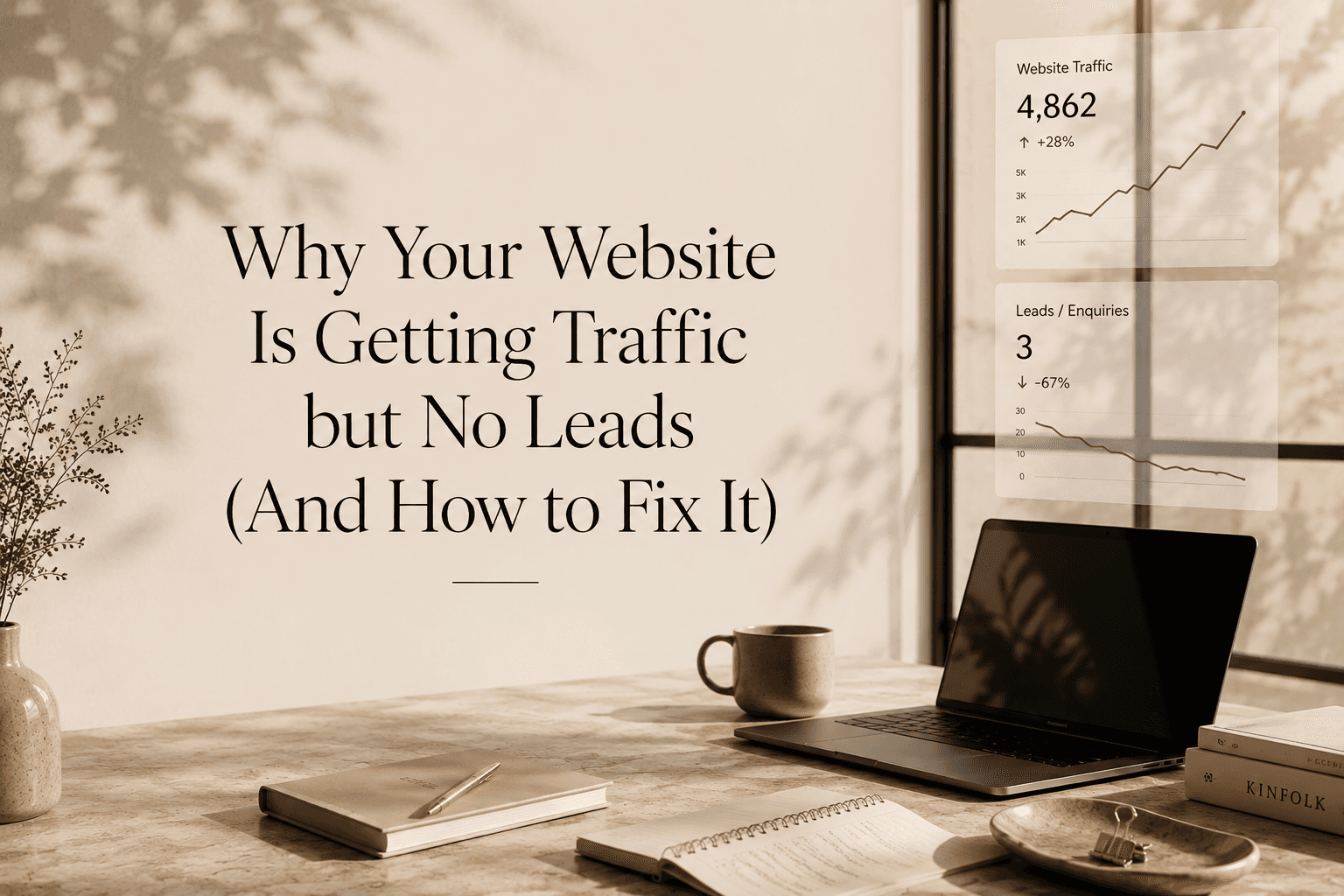
If you've ever wondered, why your website Is getting traffic but no leads, weak or missing calls to action could be one of the main reasons. Effective CTAs should be easy to find, action-oriented, and strategically placed throughout your website, not just on the contact page. Investing in custom web design services allows you to create a website with a clear user journey, ensuring every page encourages visitors to take meaningful action. Small improvements to your CTAs can make a significant difference to your website's conversion rate and overall business results.
Mistake 5: Confusing Website Navigation
Confusing navigation is another one of the most common small business website mistakes that can frustrate visitors and prevent them from taking action. If users struggle to find your services, pricing, contact details, or other important information, they're far more likely to leave your website and continue searching elsewhere. Clear navigation should help visitors move through your website naturally, making it easy to understand what your business offers and where to find the information they need.
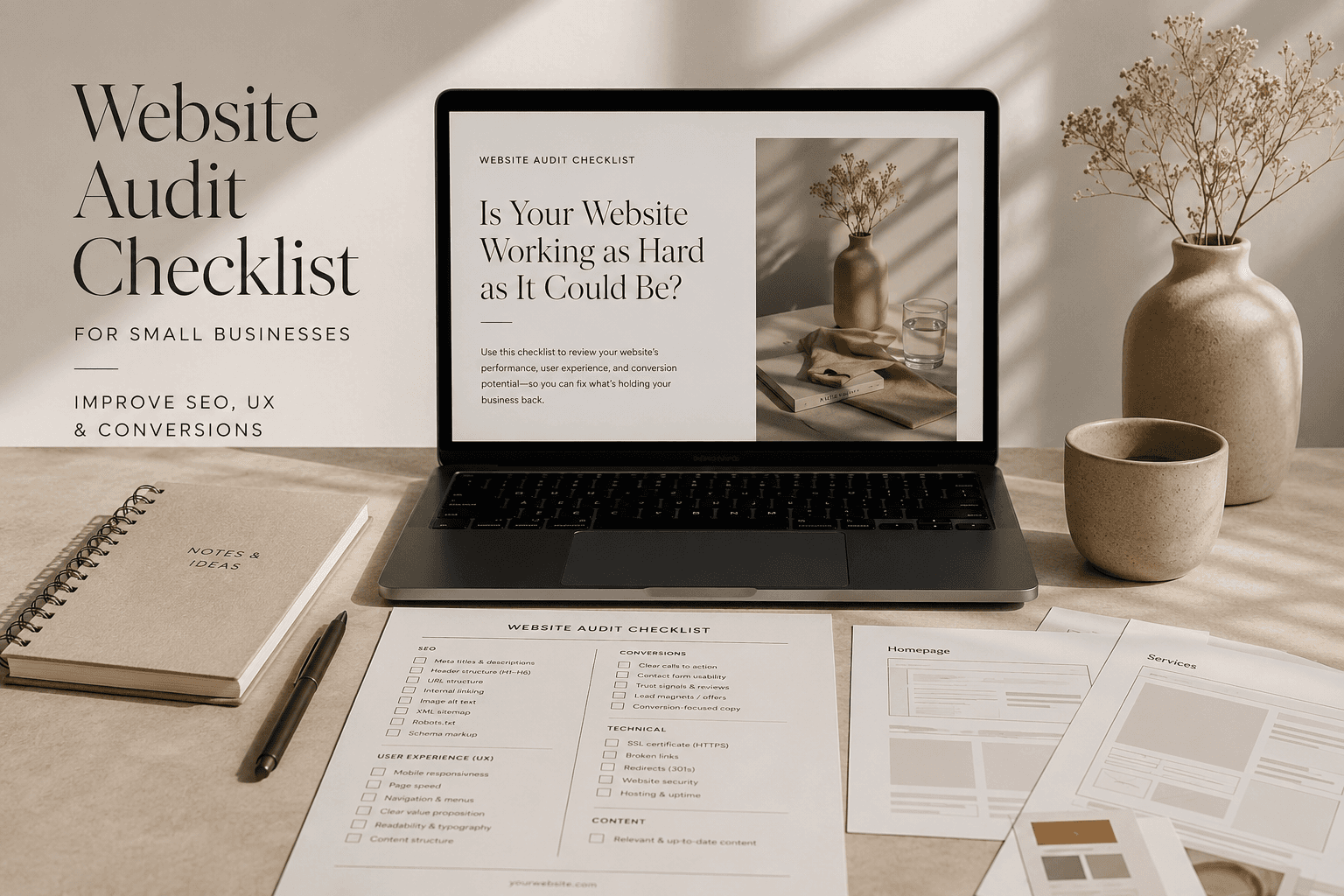
A well-organised menu, logical page structure, and consistent navigation all contribute to a better user experience and higher conversion rates. If you're unsure whether your website is easy to use, our website audit checklist for small businesses can help you identify common usability issues that may be affecting performance. Likewise, understanding what makes a website look professional goes beyond visual design alone. A professional website should also be intuitive, easy to navigate, and designed around the needs of your visitors, helping them reach their goals quickly and confidently.

Mistake 6: Ignoring SEO Best Practices
Ignoring SEO best practices is one of the most expensive mistakes a business can make because even the most attractive website won't generate results if potential customers can't find it. Search engine optimisation involves much more than adding a few keywords. It includes creating well-structured pages, writing unique title tags and meta descriptions, using headings correctly, optimising images, building internal links, and ensuring your website provides valuable content that matches what people are searching for.
If you've ever asked yourself, why is my website not showing up on Google?, poor SEO is often one of the biggest reasons. Following our on-page SEO checklist for new websites can help you identify technical and content issues that may be limiting your visibility in search results. Investing in professional small business web design also provides a strong SEO foundation, ensuring your website is built with both users and search engines in mind. Whether your business is based in Sydney, Melbourne, the Gold Coast, or anywhere else, strong SEO practices can help you attract more qualified visitors and generate more enquiries over time.
Mistake 7: Missing Trust Signals
Missing trust signals is another one of the most common small business website mistakes that can prevent visitors from becoming customers. Before contacting a business, most people look for evidence that it is credible, reliable, and experienced. If your website lacks customer testimonials, reviews, case studies, clear contact information, or a secure HTTPS connection, potential customers may hesitate to enquire, regardless of how good your products or services are. Building trust online is often the deciding factor between someone choosing your business or a competitor.
Whether you're comparing a small business website redesign vs new website or improving your existing site, trust-building elements should always be a priority. Regular updates and understanding the website maintenance cost for small businesses can also help ensure your website remains secure, functional, and professional over time. Businesses across Sydney, Melbourne, and Brisbane compete in crowded markets, making trust signals even more important for standing out and reassuring potential customers. By showcasing genuine reviews, client testimonials, project examples, and accurate business information, you can build credibility, increase confidence, and encourage more visitors to get in touch.
Mistake 8: Poor Quality or Outdated Website Content
Poor quality or outdated content is another one of the most common small business website mistakes that can negatively affect both user experience and search engine rankings. Visitors expect accurate, relevant, and up-to-date information when they visit your website. If they find outdated service descriptions, broken pages, old pricing, or content that doesn't clearly explain what your business offers, they're less likely to trust your brand or contact you. Search engines also favour websites that are regularly updated with valuable, relevant content that meets users' needs.
If you've ever wondered, is SEO worth it for small business websites?, the answer largely depends on the quality of your content. Even the best SEO strategy cannot compensate for outdated or unhelpful information. Likewise, understanding how many pages does a small business website need is about more than quantity. Each page should serve a clear purpose, provide genuine value, and help visitors make informed decisions. Keeping your website content fresh and relevant strengthens your SEO, builds trust with potential customers, and increases the likelihood of generating more enquiries.
Mistake 9: Missing or Hard-to-Find Contact Information
Making it difficult for potential customers to contact your business can cost you valuable enquiries. Even if visitors are interested in your products or services, they may leave your website if they can't quickly find your phone number, email address, contact form, or other important details. Contact information should be easy to locate from any page, with clear calls to action that encourage visitors to get in touch. A well-designed contact page also helps build credibility by showing that your business is legitimate, accessible, and ready to help.
Professional small business web design focuses on creating a clear user journey, ensuring visitors can contact your business without unnecessary clicks or confusion. If you've ever wondered, do I need a website if I have Instagram?, this is one of the biggest advantages of having a dedicated website. Unlike social media platforms, your website gives you complete control over how customers contact you, while providing a professional space to showcase your services, answer common questions, and convert more visitors into enquiries.
Mistake 10: Not Tracking Website Performance
Many small businesses invest in a website but never monitor how it performs after launch. Without tracking important metrics, it's impossible to know what's working, what needs improvement, or why visitors leave without getting in touch. Tools like Google Analytics and Google Search Console provide valuable insights into website traffic, user behaviour, search performance, and conversions. By regularly reviewing this data, you can identify opportunities to improve your website and make informed decisions based on real user activity rather than assumptions.
Professional small business web design doesn't end when your website goes live. Ongoing performance tracking helps you understand which pages generate the most enquiries, where visitors drop off, which keywords bring traffic, and how users interact with your content. Monitoring your website regularly also makes it easier to spot technical issues, improve the user experience, and refine your marketing strategy over time. Small, data-driven improvements can have a significant impact on your website's visibility, engagement, and ability to generate new business.
How to Avoid These Small Business Website Mistakes?
Avoiding common website mistakes doesn't necessarily require a complete redesign. In many cases, making a series of small improvements can significantly enhance your website's performance, user experience, and ability to generate enquiries. From improving page speed and simplifying navigation to updating your content and strengthening your SEO strategy, every improvement helps create a better experience for both visitors and search engines.
Regularly reviewing your website also allows you to identify issues before they start affecting your rankings or conversions. If you're unsure where to begin, focusing on the most common small business website mistakes is an excellent starting point.
Combining these improvements with effective UX design ensures your website is intuitive, easy to navigate, and built around the needs of your target audience. Over time, these changes can increase trust, improve visibility in search results, and help turn more website visitors into loyal customers.
Issue | Recommended Fix |
|---|---|
Slow website speed | Optimise images, improve hosting, and remove unnecessary scripts and plugins. |
Poor mobile experience | Use a fully responsive design that works seamlessly across all devices. |
Weak value proposition | Clearly communicate what your business offers and why customers should choose you. |
Missing or weak calls to action | Add clear, action-oriented CTAs throughout your website. |
Confusing navigation | Organise your menu and page structure to make information easy to find. |
Poor SEO | Optimise titles, headings, internal links, images, and page content. |
Missing trust signals | Display testimonials, reviews, case studies, and accurate business information. |
Outdated content | Review and update your website regularly to keep information accurate and relevant. |
Hard-to-find contact information | Make your phone number, email, and contact page easy to access from every page. |
Not tracking website performance | Monitor your website using Google Analytics 4 and Google Search Console to identify opportunities for improvement. |
How Small Decisions Studio Can Help?
At Small Decisions Studio, we believe every small business deserves a website that reflects the quality of its brand and helps it grow with confidence. Our approach to small business web design combines clean, modern visuals with strategic thinking, ensuring every website is not only visually appealing but also easy to navigate, fast, and built to convert visitors into customers. We pay close attention to branding, creating websites that communicate your business's personality while delivering a consistent and professional user experience.
Whether you need a brand-new website, a complete website redesign, SEO improvements, UX design enhancements, or ongoing website maintenance, we tailor every project to the unique needs of your business.
We've worked with businesses across a range of industries, including interior design companies, logistics companies, bridal studios, and many other service-based businesses. Rather than relying on one-size-fits-all templates, we focus on creating websites that strengthen your online presence, build trust with potential customers, and support your long-term business goals.
Final Thoughts on Small Business Website Mistakes
Your website is often the first impression potential customers have of your business, making it one of your most valuable marketing assets. While some issues may seem minor, they can have a significant impact on user experience, search visibility, and conversions over time.
The good news is that most small business website mistakes can be identified and resolved with the right strategy and regular maintenance. By improving your website's performance, content, navigation, and overall user experience, you'll be better positioned to attract the right audience, build trust, and turn more visitors into loyal customers.
Frequently Asked Questions
What are the most common small business website mistakes?
Some of the most common small business website mistakes include slow loading speeds, poor mobile usability, confusing navigation, weak calls to action, outdated content, missing trust signals, poor SEO, and difficult-to-find contact information. Regularly reviewing your website can help identify and fix these issues before they affect your business.
Why is my small business website not getting customers?
There are many possible reasons, including poor user experience, slow website speed, weak calls to action, unclear messaging, or a lack of search engine optimisation. In many cases, the problem isn't attracting visitors but converting them into enquiries or customers.
How often should a small business update its website?
Small businesses should review and update their websites regularly. Content, plugins, security features, and business information should be checked throughout the year, while a more comprehensive review or redesign may be needed every few years depending on your business goals and industry.
Can website design affect SEO?
Yes. Website design and SEO work together to improve your website's performance. Factors such as page speed, mobile responsiveness, navigation, internal linking, and user experience all influence how search engines evaluate and rank your website.
What should every small business website include?
Every small business website should have clear branding, a strong value proposition, intuitive navigation, mobile-friendly design, clear calls to action, contact information, trust signals such as testimonials or reviews, and content that is optimised for both users and search engines.
How do I know if my website needs a redesign?
If your website looks outdated, loads slowly, isn't mobile-friendly, has poor conversion rates, or no longer reflects your business, it may be time for a redesign. A modern website should provide an excellent user experience while supporting your marketing and business goals.
Can I fix website mistakes myself?
Yes, many common website issues can be improved on your own, such as updating content, improving navigation, adding clear calls to action, or optimising images. However, more complex technical, design, SEO, or performance issues often benefit from professional support to achieve the best long-term results.
BLOG