Website Redesign: 10 Signs Your Small Business Website Needs an Upgrade
7 MINUTES READ
23 May 2026
Small business website redesign is often delayed far longer than it should be, especially when business owners assume an acceptable-looking website is still doing its job. In reality, outdated design, slow loading times, poor mobile usability, and weak conversion paths can quietly cost businesses valuable leads.
That is exactly why many growing brands eventually start exploring small business website redesign services, particularly when their current website no longer reflects the quality of their business or supports visibility on search engines.
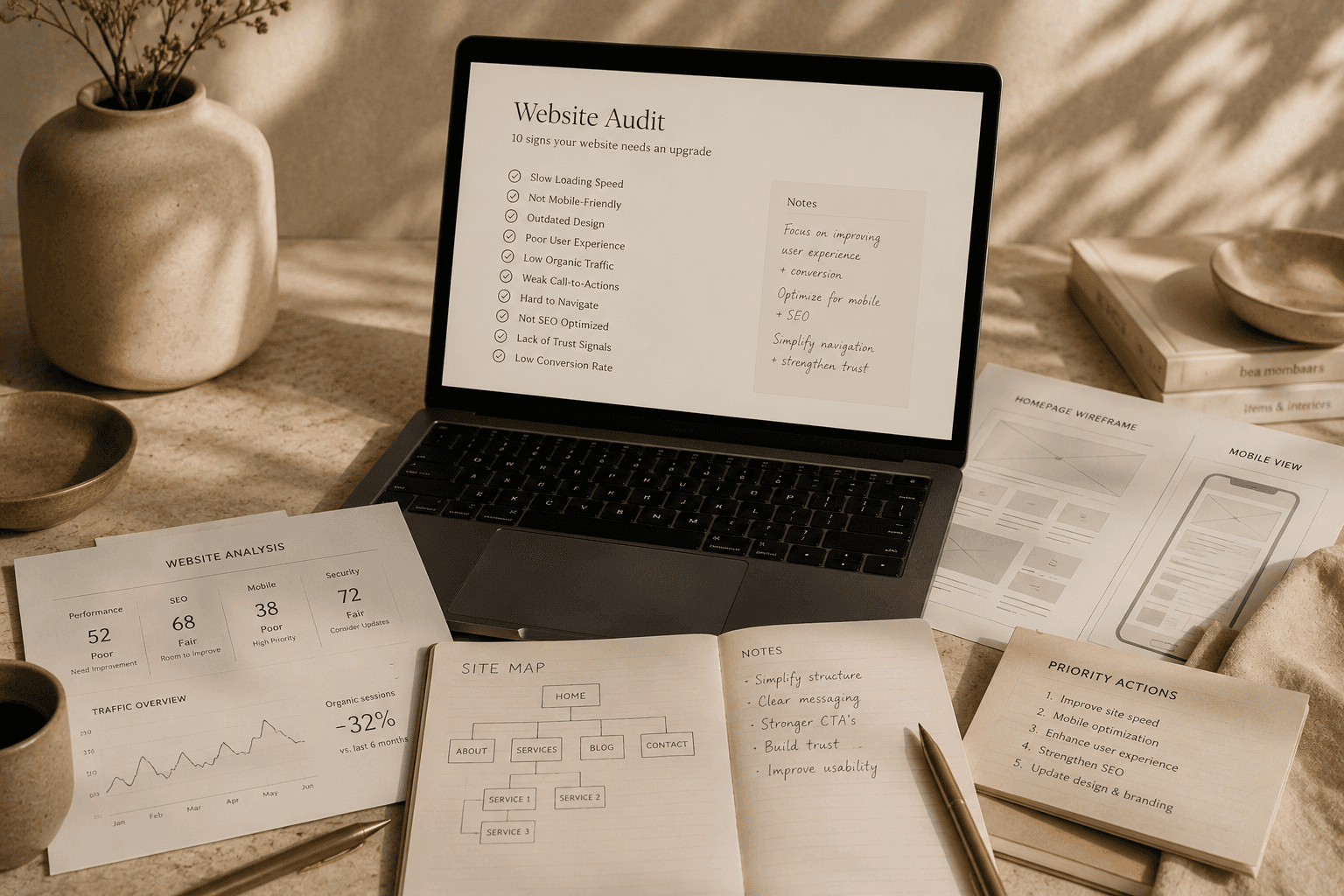
10 Signs Your Small Business Website Needs a Redesign
A high-performing website should do far more than simply exist online. It should communicate trust, guide visitors naturally toward action, and support measurable business growth over time. This small business website redesign guide explores ten clear warning signs that suggest your current website may be holding your business back. Whether your site feels visually outdated, struggles to rank on Google, or simply fails to generate consistent enquiries, investing in the right small business website redesign services can help transform your website into a stronger long-term business asset.
Before diving into the ten signs, it is worth understanding that website performance problems often go beyond design alone. Businesses considering a redesign are often also evaluating broader decisions around custom builds, SEO foundations, and long-term website investment. If you are still comparing options, our guides on custom website vs template and how much does a small business website cost can help you make a more informed decision.
1. Your Website Looks Outdated
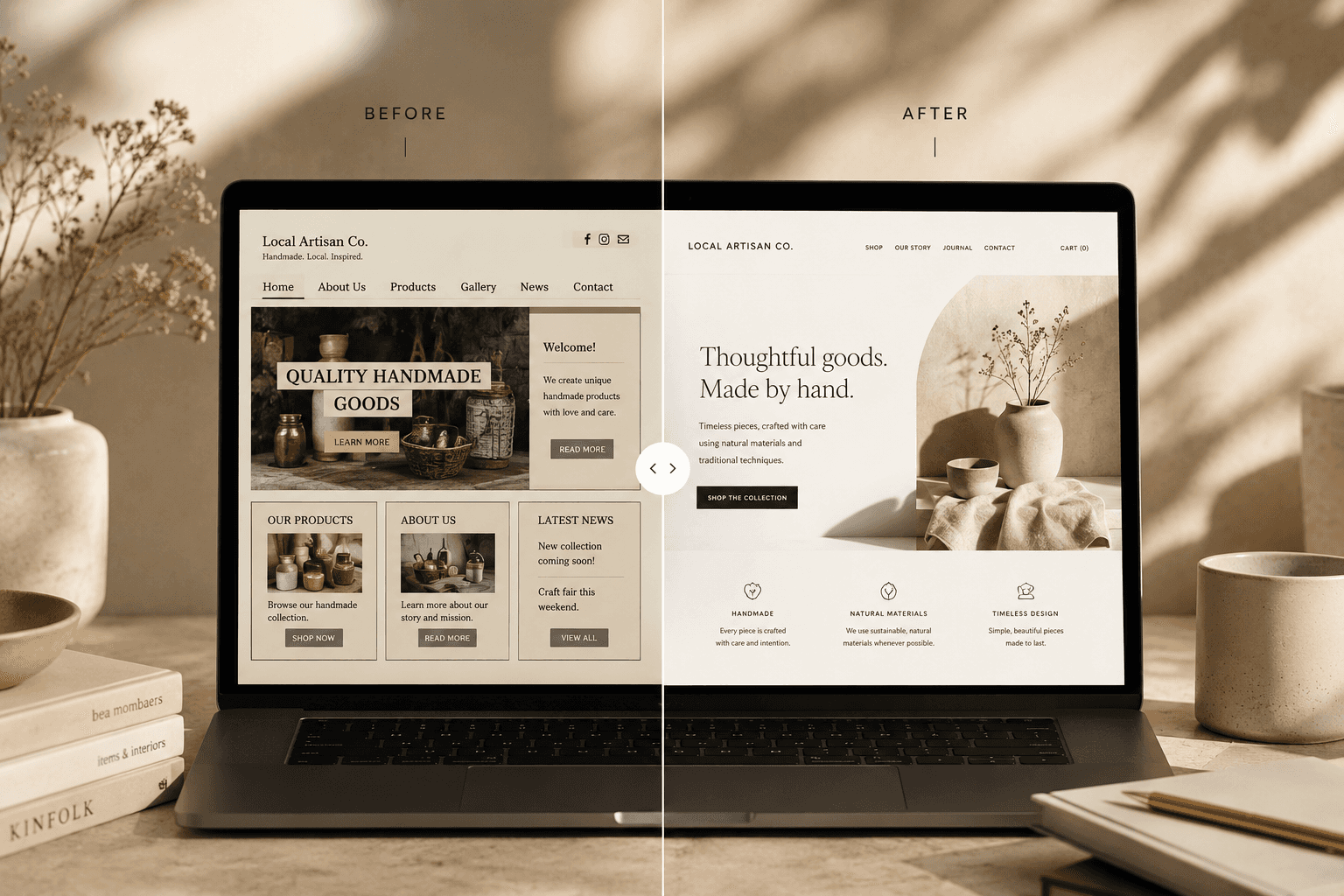
One of the clearest signs that a small business website redesign may be overdue is when your website visually feels stuck in the past. Design trends evolve, but customer expectations evolve even faster. If your competitors present a cleaner, more polished digital presence, visitors may quickly assume your business is less established or less credible, even if your actual services are excellent. A strategic website redesign helps modernise not just aesthetics, but also trust, usability, and overall first impressions.
2. Your Website Is Not Mobile Friendly
A website that performs poorly on mobile can quietly cost you valuable leads. Tiny text, awkward layouts, hard-to-click buttons, and broken formatting create frustration that pushes visitors elsewhere. Since most users now browse from mobile devices, poor responsiveness is one of the strongest reasons to redesign your website. Professional website redesign services can significantly improve usability, engagement, and conversion performance across all screen sizes.
3. Slow Loading Times Are Hurting Performance
Slow websites create friction immediately. Even if your design looks visually appealing, sluggish performance can increase bounce rates, damage user experience, and weaken SEO visibility over time. Outdated code, oversized media, unnecessary scripts, or inefficient technical structure are common culprits. A well-executed small business website redesign should improve both design and performance so your website feels fast, modern, and reliable.
4. Your Website Is Not Generating Leads or Enquiries
A website should do more than simply exist online. If visitors are arriving but not taking action, something may be broken in the user journey. Weak messaging, poor call-to-action placement, unclear service presentation, or confusing layouts can all quietly reduce conversions. This is where strategic website redesign services become particularly valuable through better structure and UX optimisation.
5. Your Business Has Changed but Your Website Has Not
Businesses evolve over time, and your website should reflect that growth. If you have expanded your services, refined your positioning, updated your branding, or shifted toward a different audience, outdated messaging can create confusion and weaken trust. A website redesign helps align your digital presence with where your business stands today rather than where it was several years ago.
6. Your Website Is Difficult to Update
If even simple content updates feel frustrating or technically complicated, your current platform may be holding you back. Businesses that struggle to add new services, update copy, publish content, or make design changes often end up with stale websites that no longer support growth. Modern website redesign services should leave you with a more flexible and scalable platform that is easier to manage moving forward.
7. Navigation Confuses Visitors
A confusing website structure makes it harder for visitors to trust your business and take action. If important pages are difficult to find, service information feels buried, or the overall flow lacks logic, users are far more likely to leave. A strong redesign often involves rethinking information architecture, internal linking, and user journeys to create a more intuitive experience that guides visitors naturally.
8. Your Website Was Not Built with SEO in Mind
Even beautifully designed websites can underperform if the technical foundations are weak. Poor metadata, weak internal linking, messy heading structures, slow performance, and ineffective page hierarchy all make it harder for search engines to understand and rank your content. If visibility matters to your business, a small business website redesign should include proper SEO foundations from the start. Strong SEO web design services ensure your website is built for both discoverability and long-term growth rather than treating optimisation as an afterthought.
9. Competitors Look More Professional Online
Potential customers naturally compare businesses online before making decisions. If competitor websites look faster, cleaner, more trustworthy, or easier to use, your current website may be costing you opportunities without you realising it. Website redesign is not always about chasing trends. Sometimes it is about remaining competitive and ensuring your digital presence reflects the quality of your actual work.
10. Your Website No Longer Supports Business Growth
The clearest sign that you need a small business website redesign is when your website stops functioning as a business asset. A strong website should support visibility, trust, lead generation, and long-term growth. If your current website creates limitations instead of opportunities, investing in the right small business website redesign services can help transform it into a platform that actively supports your business goals.
What to Do Before Starting a Small Business Website Redesign?
Before starting a small business website redesign, it is important to understand what is working, what is underperforming, and what you want your new website to achieve. A successful redesign is not simply about updating the visual appearance of your website. It should be guided by clear business goals, user needs, and opportunities to improve visibility, conversions, and overall performance.
Review Your Current Website Performance: Analyse traffic, enquiries, conversion rates, and user behaviour to identify problem areas.
Define Your Business Goals: Decide whether your priority is generating more leads, improving credibility, increasing visibility, or supporting growth.
Audit Your Existing Content: Identify pages, blog posts, and service content that should be improved, consolidated, or retained.
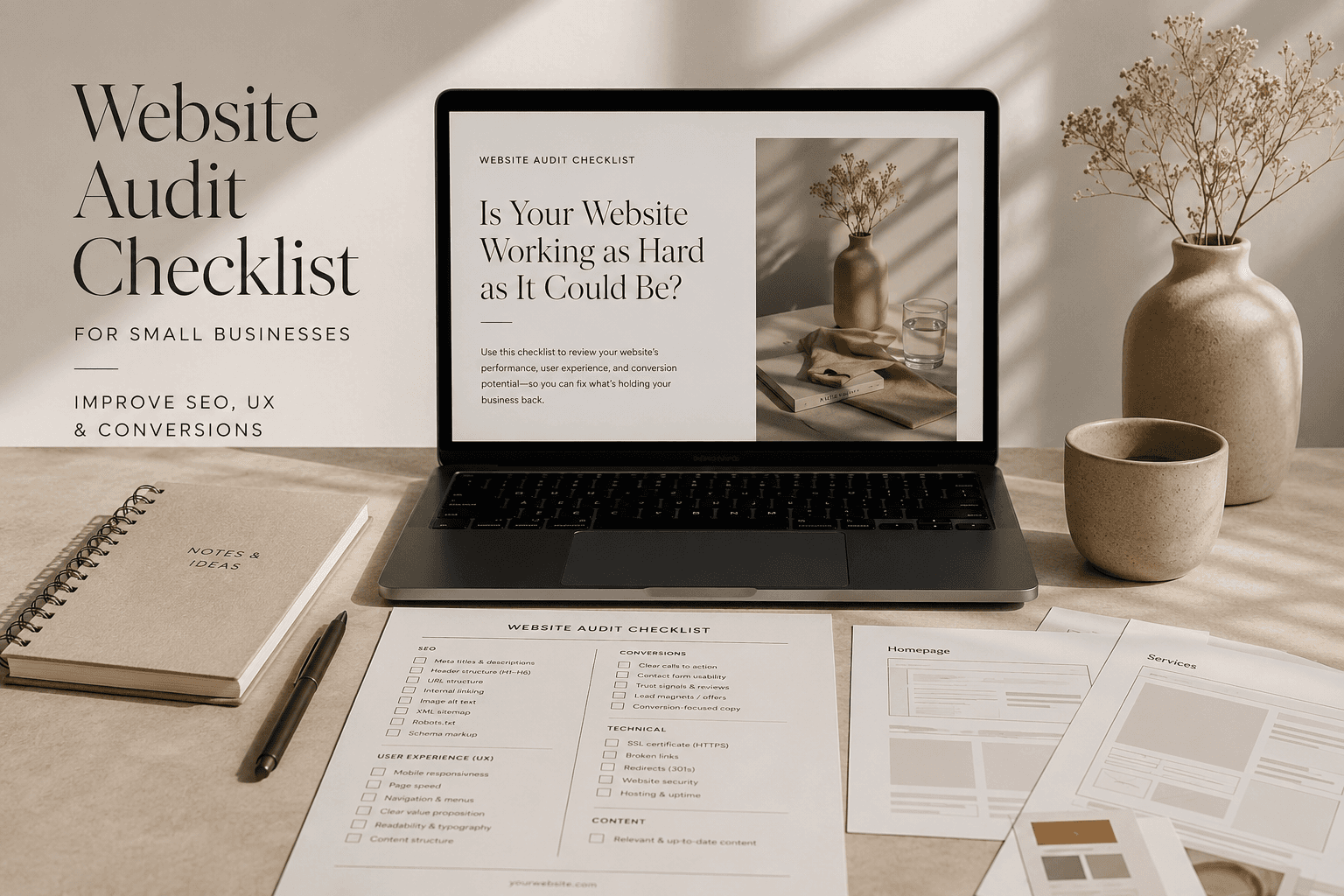
Evaluate SEO Opportunities: Review keyword targeting, site structure, internal linking, and technical SEO issues before beginning the redesign process. Following a website redesign checklist for SMEs can help ensure important optimisation opportunities are not overlooked.
Small Business Website Redesign Guide Conclusion
If there is one takeaway from this small business website redesign guide, it is that redesigning your website is rarely just about appearance. A website that looks acceptable on the surface can still create friction, weaken trust, limit search visibility, and quietly cost your business valuable opportunities. If several of these signs feel familiar, it may be time to consider whether your current website is still supporting your business growth. The right website redesign services can help turn an outdated website into a stronger long-term business asset.
Frequently Asked Questions
How often should a small business website be redesigned?
There is no fixed timeline, but many businesses consider a website redesign every three to five years. The right timing depends on changes in your business, customer expectations, technology, and website performance.
What are the benefits of a small business website redesign?
A website redesign can improve user experience, strengthen credibility, support SEO performance, increase conversions, and better align your website with your current business goals.
How do I know if my website needs a redesign?
Common signs include outdated design, poor mobile usability, slow loading speeds, declining leads, weak search visibility, and difficulty updating content.
How much does a small business website redesign cost?
Website redesign costs vary depending on the size of the project, design requirements, functionality, and SEO needs. Businesses should focus on long-term value rather than upfront cost alone.
Should a website redesign include SEO improvements?
Yes. A successful redesign should address both design and SEO foundations. Improving site structure, page speed, internal linking, metadata, and user experience can help support long-term search visibility.
BLOG