The Ultimate On-Page SEO Checklist for New Websites (2026 Guide)
5 MINUTES READ
17 May 2026
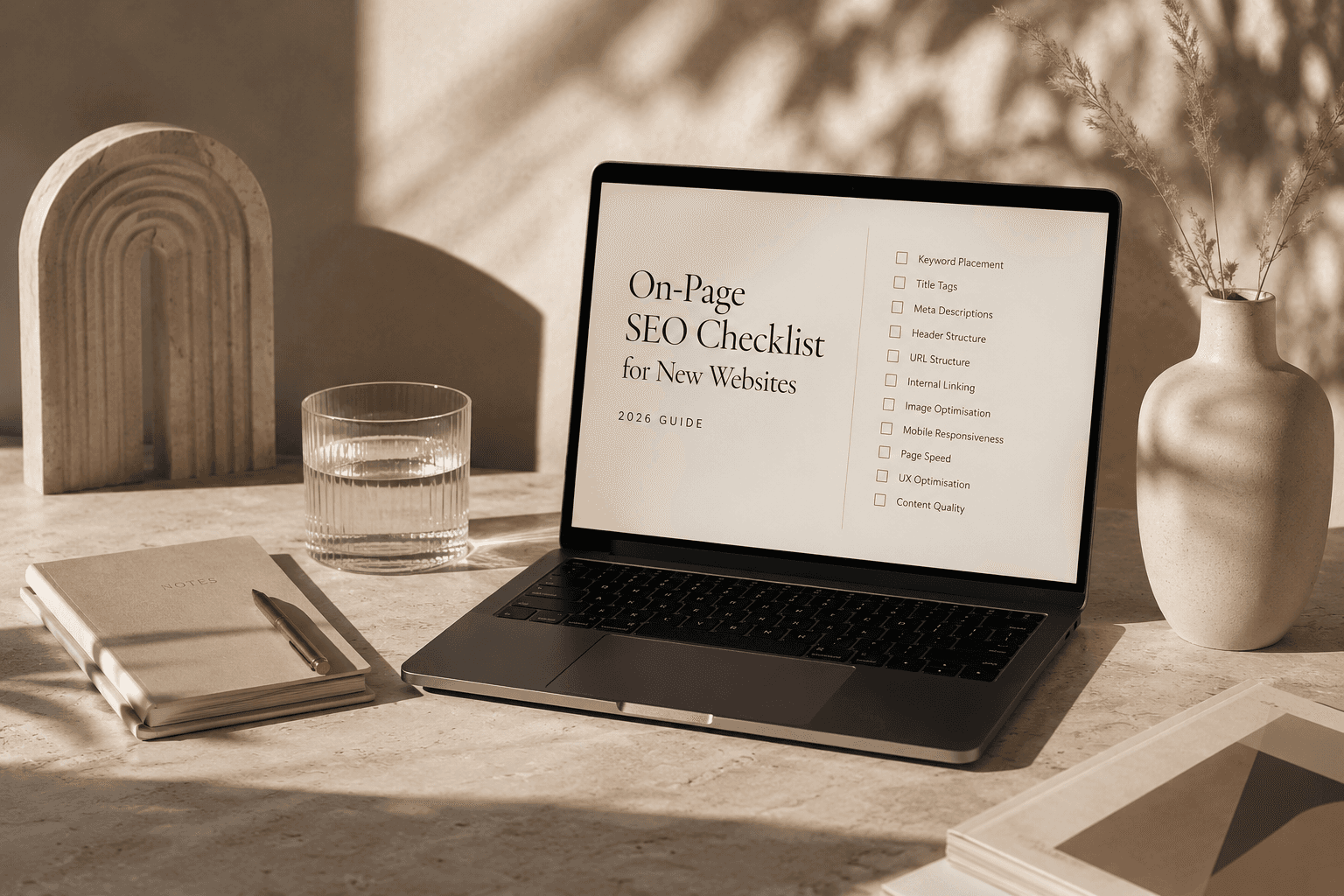
Launching a new website is exciting until you realise that publishing a beautiful design does not automatically mean people will find it. Search engines still need clear signals to understand what your website is about, how your pages connect, and whether the experience is actually useful for visitors. That is exactly where a solid on-page SEO checklist comes in, especially when you are considering premium small business web design services.
Many new websites focus heavily on aesthetics but overlook the structural details that help content rank. Things like metadata, internal linking, heading hierarchy, image optimisation, and mobile usability all play a role in how visible your site becomes over time. Strong search engine optimisation and SEO web design services are not about stuffing keywords into random paragraphs. It is about building a custom website that makes sense for both users and search engines.
This is especially important for newer sites that do not yet have strong authority or backlinks. Getting the fundamentals right early can save months of cleanup later.
If you're still deciding whether to invest in a fully tailored site or start with a pre-made framework, our guide on Custom Website vs Template for Small Businesses is a useful place to start. And if budget planning is part of your launch process, you may also want to read How Much Does a Small Business Website Cost in 2026?
This guide walks through a practical on-page SEO checklist you can use to improve rankings, usability, and long-term website performance from day one.
Why On-Page SEO Matters for New Websites?
New websites often struggle not because the design is weak, but because the technical and content foundations are incomplete.
A visually polished homepage means very little if Google cannot properly crawl your content, understand page relationships, or identify what each page should rank for. Even websites with strong branding can remain invisible if the basics are missing.
A proper on-page SEO checklist helps you create structure from the start.
Some of the biggest benefits include:
Better crawlability for search engines
Clearer keyword targeting
Improved user experience
Faster loading pages
Stronger internal linking structure
Better mobile usability
Higher potential conversion rates
Modern SEO web design services overlap heavily with UX optimisation. If visitors land on a slow, confusing, or poorly structured website, rankings can suffer over time as engagement signals weaken.
The strongest websites combine thoughtful design with strategic search engine optimisation from the beginning rather than trying to patch SEO in later.
Optimise Your On-Page SEO Strategy
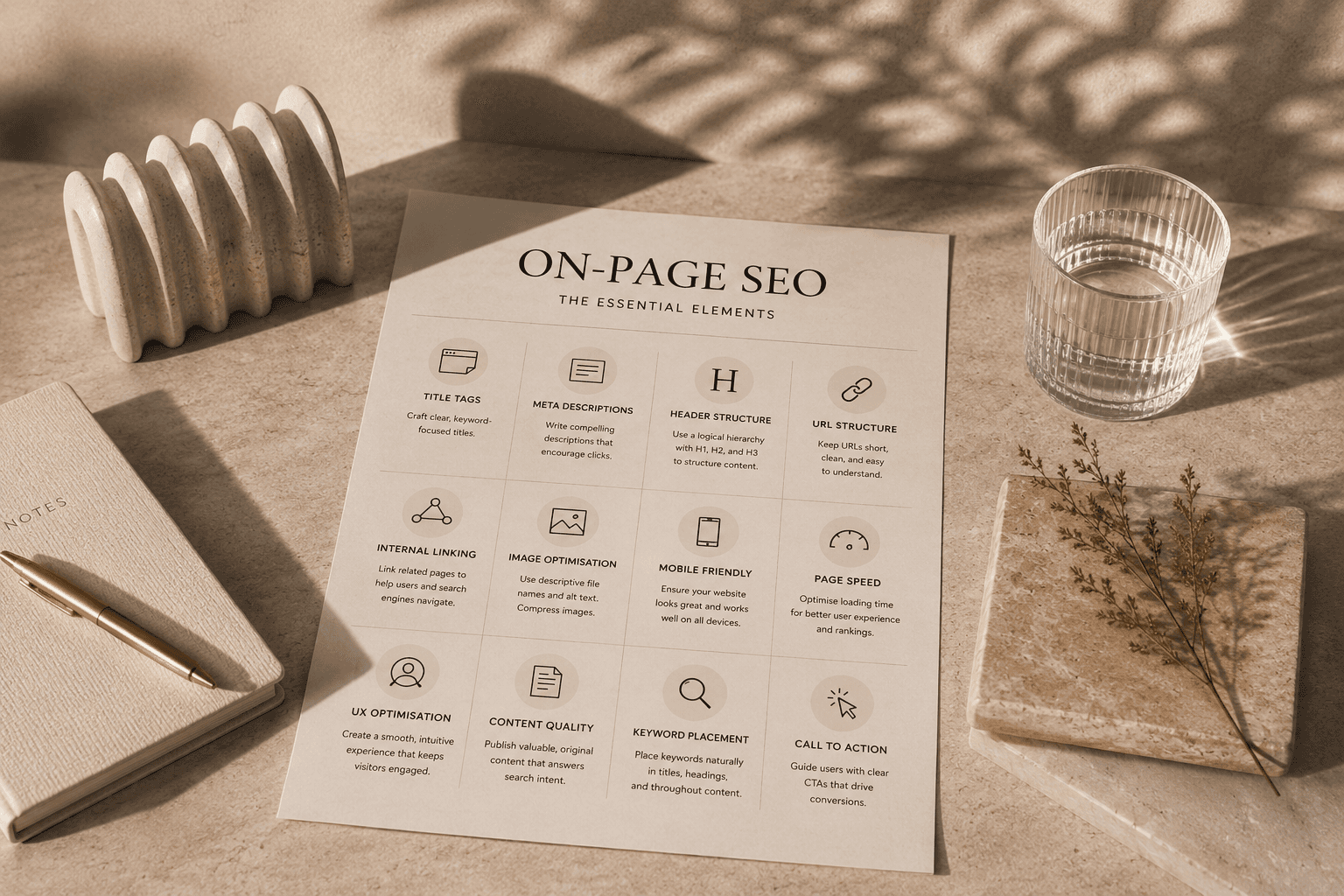
A strong on-page SEO checklist starts with the fundamentals that help search engines understand your website clearly. Every page should have a focused title tag, compelling meta description, clean URL structure, and a logical heading hierarchy that makes content easy to scan. Keyword placement still matters, but modern search engine optimisation is less about repetition and more about relevance, structure, and intent.
Internal linking is another essential part of effective on-page optimisation, especially for new websites building authority. Linking related pages helps search engines discover content more efficiently while guiding visitors through your website naturally. For example, connecting service pages, blog resources, and supporting guides creates a stronger content ecosystem while improving usability at the same time.
Technical user experience also plays a major role. Fast loading speeds, proper image compression, mobile responsiveness, and strong UX optimisation all contribute to better performance. Search visibility and user experience now go hand in hand, which is why modern responsive website design should always support both discoverability and conversions.
Use Clear Title Tags and Meta Descriptions
A strong on-page SEO checklist for new websites always starts with properly optimised title tags and meta descriptions. These elements help search engines understand your pages while also influencing whether users actually click on your website in search results. Every page should have a unique title, a relevant keyword focus, and a meta description written for real people rather than search engines alone.
Improve Internal Linking Structure
Internal linking plays a major role in helping both users and search engines navigate your website more effectively. Connecting related blog posts, service pages, and landing pages creates a stronger content structure while improving crawlability at the same time. Strategic internal linking also helps distribute authority across pages and keeps visitors engaged for longer periods. In many cases, businesses wondering why my website is not showing up on Google often overlook weak internal linking and disconnected website structure as part of the problem.
Focus on Mobile Responsiveness
Mobile responsiveness is now one of the most important parts of modern SEO web design services. A website that feels difficult to use on phones or tablets can negatively impact rankings, engagement, and conversions over time. Responsive website design should make navigation, content, and calls to action feel simple and intuitive across every screen size.
Optimise Website Speed and Images
Website speed directly affects both user experience and search engine performance. Large image files, unnecessary animations, and poorly optimised assets can slow pages down significantly, especially on mobile devices. Compressing images, reducing heavy scripts, and improving loading times are essential parts of any effective search engine optimisation strategy.
Create Logical Heading Structure
Clear heading hierarchy helps users scan content more naturally while also helping search engines better understand page structure. Every page should use headings logically, starting with one H1 followed by organised H2 and H3 sections where necessary. A clean content structure improves readability, supports SEO optimisation, and creates a more professional browsing experience overall.
Before publishing any new page, check these essentials:
Is your title tag clear and keyword-focused?
Does your meta description encourage clicks?
Are your headings structured logically for readability?
Have you linked to relevant internal pages?
Does the page load quickly on desktop and mobile?
For businesses investing in growth, a practical on-page SEO checklist should work alongside strong website foundations. Even the best website design services for small businesses can underperform if essential on-page optimisation is ignored, which is why SEO should be treated as part of the website build rather than an afterthought.
Common SEO Mistakes New Websites Should Avoid
Even with a strong design and modern branding, many websites struggle to gain visibility because important SEO fundamentals are overlooked early on. A practical on-page SEO checklist for new websites should help prevent common issues that quietly affect rankings, crawlability, and user experience over time.
In many cases, businesses only realise the importance of structure, internal linking, metadata, and technical optimisation after noticing that their website is not performing as expected. Following a proper on-page SEO checklist from the beginning can make long-term growth and visibility much easier to achieve.
Ignoring Google Search Console Setup
Many new websites are launched without properly setting up Google Search Console, which makes it much harder to monitor indexing, visibility, and technical SEO issues. This is often one of the hidden reasons why websites struggle to appear in search results during the early stages. A strong on-page SEO checklist for new websites should always include proper indexing setup, sitemap submission, and ongoing monitoring through Search Console.
Publishing Thin or Low-Value Content
Search engines prioritise content that feels useful, informative, and genuinely relevant to users. Many businesses publish extremely short pages with little structure or value, expecting them to rank quickly. Thin content can weaken visibility over time, especially on newer domains that still lack authority and trust signals.
Using Duplicate Meta Titles and Descriptions
Duplicate page titles and meta descriptions can create confusion for search engines while also weakening keyword targeting across the website. Every important page should have unique metadata that clearly explains the purpose of the content. Strong metadata also improves click-through rates by making pages more compelling within search results.
Forgetting Image Optimisation and Alt Text
Large image files and missing alt text are common SEO mistakes that negatively affect both accessibility and page performance. Proper image optimisation helps improve loading speed while also giving search engines additional context about page content. Even simple improvements like descriptive file names and keyword-relevant alt text can strengthen overall optimisation.
Prioritising Speed Over Website Structure
Many businesses rush through the launch process without properly planning website structure, internal linking, or SEO foundations. Questions like how long does it take to build a website become especially important once companies realise that strong SEO and UX strategy require careful planning from the beginning. Launching too quickly can lead to poor organisation, weaker rankings, and long-term performance issues later on.
Why an On-Page SEO Checklist for New Websites Matters Long-Term?
Building a visually appealing website is only one part of creating a strong online presence. Without proper structure, optimisation, and user experience, even well-designed websites can struggle to gain visibility or attract consistent traffic.
A practical on-page SEO checklist for new websites helps create stronger foundations for search engine rankings, usability, and long-term growth from the very beginning. From metadata and internal linking to mobile responsiveness and content structure, every detail contributes to how search engines and visitors experience your website. Investing in SEO early makes it much easier to improve visibility, engagement, and website performance over time.
Frequently Asked Questions
What is SEO and how does it work?
SEO, or search engine optimisation, is the process of improving a website so it can appear more prominently in search engine results. SEO works by helping search engines understand your website content, structure, and relevance to specific search queries. This includes elements like keywords, page structure, website speed, backlinks, and overall user experience.
What is on-page SEO?
On-page SEO refers to all optimisation efforts that happen directly on your website pages. This includes page titles, meta descriptions, heading structure, keyword placement, internal linking, image alt text, and content optimisation. Strong on-page SEO helps search engines better understand your content while also improving the experience for visitors.
What is included in an off-page SEO checklist?
An off-page SEO checklist usually includes activities that improve website authority outside of the website itself. This can involve backlink building, local citations, social signals, brand mentions, guest posting, and directory listings. Off-page SEO helps strengthen credibility and can improve long-term rankings in search engines.
How long does SEO take to work for a new website?
SEO usually takes time before noticeable improvements begin to appear, especially for brand new websites. In many cases, it can take several weeks or months for Google to fully crawl, index, and evaluate new content. The timeline often depends on competition, website authority, content quality, and overall SEO strategy.
Why does SEO take so long?
SEO takes time because search engines need to continuously analyse, test, and compare websites before adjusting rankings. New websites also start with very little authority or trust, which means results rarely happen overnight. Consistent content, strong SEO foundations, internal linking, and ongoing optimisation gradually help improve visibility and rankings over time.
BLOG