Why Is My Website Not Showing Up on Google? 10 Common Reasons and Fixes
7 MINUTES READ
23 May 2026
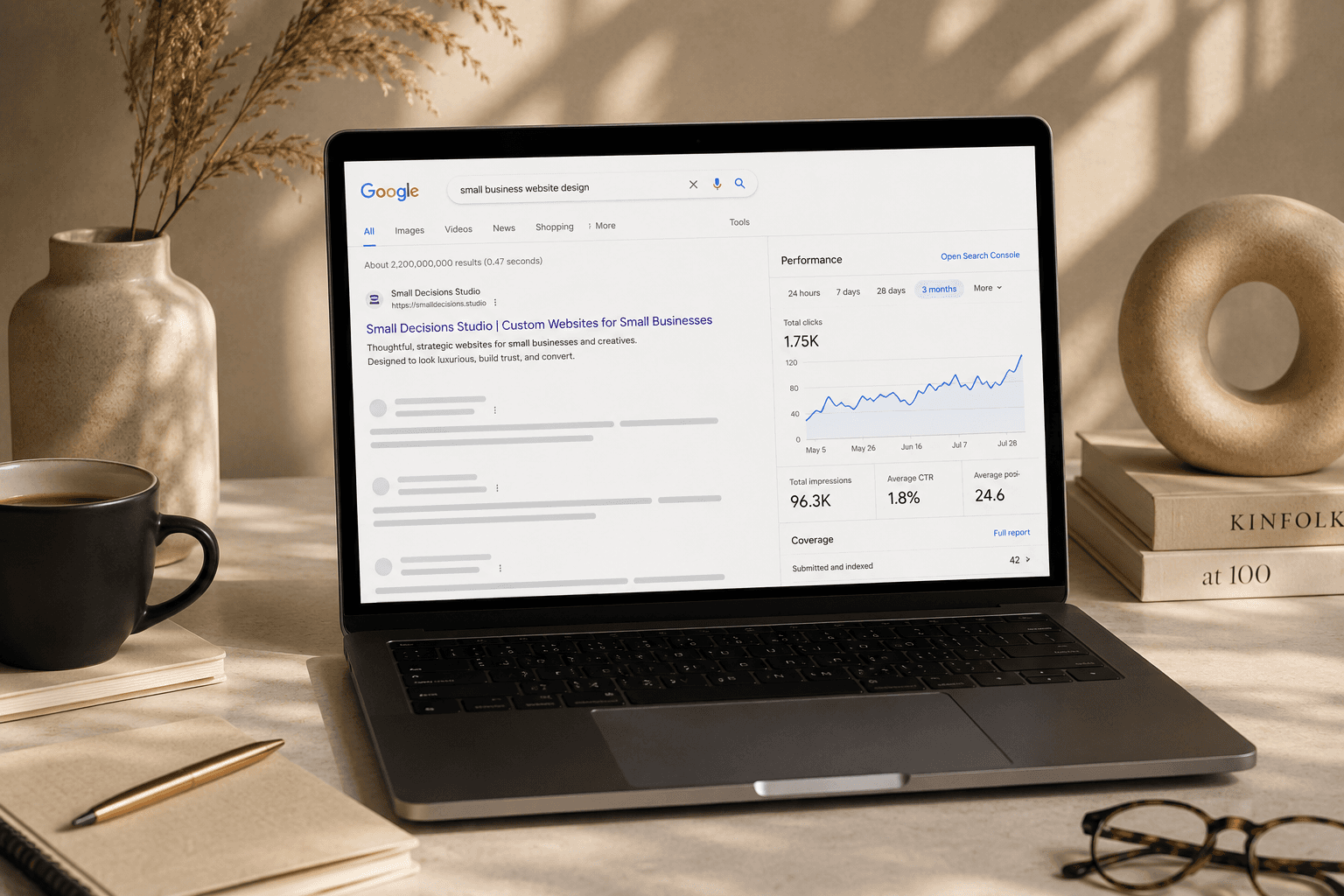
Why is my website not showing up on Google is a question many business owners ask after launching a new website and seeing little to no visibility in search results. While this can feel frustrating, the issue is often tied to a handful of common SEO, technical, or content-related problems that can be identified and fixed.
From indexing issues and weak keyword targeting to poor site structure or a lack of authority signals, several factors may prevent your website from appearing where potential customers can find it. In this guide, we’ll break down the most common reasons your website may not be showing up on Google and what you can do to improve your visibility.
Top Reasons Why My Website Is Not Showing Up on Google
If you are asking yourself why is my website not showing up on Google, the answer is rarely limited to one issue. Website visibility depends on several moving parts, including technical SEO, content quality, indexing, website structure, and overall user experience. In many cases, businesses assume the issue is purely SEO-related, when the reality is that poor website foundations can quietly hold rankings back from the start.
This is exactly why combining SEO strategy with strong SEO web design services often creates far better long-term results than treating optimisation as an afterthought. If you are still building your digital presence, our guides on custom website vs template for small businesses and the ultimate on-page SEO checklist for new websites can also help you understand the bigger picture before diving into the specific reasons below.

1. Your Website Has Not Been Indexed by Google
One of the most common answers to why is my website not showing up on Google is surprisingly simple: Google may not have indexed your website yet. Indexing is what allows Google to discover, process, and store your pages in its search database so they can appear in results. Many business owners assume publishing a website automatically means instant visibility, but that is not how search works. If your website is new, recently redesigned, or missing technical setup elements, Google may simply not know your pages exist.
How to fix it
The quickest way to check this is by searching site:yourdomain.com in Google. If no pages appear, indexing may be the issue. Google Search Console will also show whether your pages have been discovered, crawled, excluded, or indexed properly. This is one of the technical details professional SEO web design services often handle from launch to prevent visibility issues early on.
Submit your XML sitemap through Google Search Console
Request indexing manually for important pages
Check for accidental noindex settings or crawl blocks
2. You Are Targeting the Wrong Keywords
If your website technically exists in Google but still struggles for visibility, poor keyword targeting may be the real issue. Businesses often optimise for phrases nobody actually searches for or highly competitive keywords that newer websites have little chance of ranking for early on. If you are wondering why is my website not showing up on Google, it may be less about technical problems and more about targeting unrealistic search intent.
How to fix it
Strong SEO starts with understanding what your audience actually types into Google. Broad, ultra-competitive terms often look appealing, but newer websites benefit far more from realistic long-tail opportunities. Strategic planning at the website stage matters here, which is why businesses comparing custom website vs template solutions should also think about long-term SEO flexibility.
Focus on long-tail keywords with clearer intent
Prioritise realistic competition levels for a newer website
Match content to actual search behaviour rather than assumptions
3. Your On-Page SEO Foundations Are Weak
Even if your website has been indexed and targets relevant keywords, weak on-page SEO can still prevent strong visibility. Google relies on clear signals to understand what your pages are about, and poor structure makes that much harder. Missing title tags, weak meta descriptions, poor heading hierarchy, duplicate content, thin service pages, and weak internal linking can all contribute to poor rankings. If you are still asking why is my website not showing up on Google, weak on-page optimisation is often a major factor.
How to fix it
This is where foundational SEO work matters far more than surface-level design. Even visually polished websites can underperform if their technical structure is weak. If you want a deeper breakdown, our ultimate on-page SEO checklist for new websites covers the most important optimisation elements in more detail.
Optimise page titles, meta descriptions, and heading structure
Strengthen internal links between relevant pages and content
Expand thin pages with genuinely useful information
4. Your Website Is Too Slow or Performs Poorly on Mobile
Website performance directly affects both user experience and search visibility. Slow-loading websites create friction immediately, while poor mobile usability can push visitors away before they engage with your content. Since Google increasingly prioritises user experience signals, performance issues can absolutely contribute if your website is not showing up on Google as expected. Heavy animations, oversized media, outdated code, or poor mobile responsiveness are all common culprits.
How to fix it
A strong website should not only look polished but also perform efficiently across all devices. This is where professional web design services and SEO strategy overlap, since performance optimisation should be built into the website experience rather than treated as an afterthought.
Compress oversized images, videos, and media assets
Remove unnecessary scripts or performance-heavy effects
Test your website using PageSpeed Insights and mobile usability tools
5. Your Website Has Very Little Authority or Backlink Trust
New websites often struggle simply because Google has little reason to trust them yet. Authority plays a major role in rankings, especially in competitive spaces. If your content is decent but your website still lacks visibility, limited backlink trust may be part of the answer to why is my website not showing up on Google. Search engines look at signals such as backlinks, citations, mentions, and broader business credibility when evaluating websites.
How to fix it
Authority takes time, but there are practical ways to strengthen it. Business listings, professional social profiles, client mentions, case studies, and useful content all contribute to long-term trust signals. Businesses investing in stronger SEO web design services often pair UX technical optimisation with authority-building strategies rather than relying on design alone.
Build trustworthy business citations and profile links
Earn backlinks through partnerships, case studies, or mentions
Publish useful content consistently to strengthen topical authority
6. Your Website Content Is Too Thin or Not Helpful Enough
Google prioritises content that genuinely helps users solve problems or find useful information. If your website only contains minimal service descriptions, vague marketing copy, or pages with little informational value, rankings may struggle. Many businesses asking why is my website not showing up on Google underestimate how much content depth impacts discoverability, especially in competitive industries.
How to fix it
Think beyond brochure-style websites. Strong websites educate, build trust, and demonstrate expertise while making it easy for visitors to take action. If your business is considering a broader website redesign, improving content quality should be part of the strategy rather than focusing purely on visuals.
Expand service pages with clearer, more detailed information
Add supporting educational blog content around relevant topics
Focus on clarity, expertise, and genuine usefulness for visitors
7. Your Website Structure Makes It Hard for Google to Crawl
Sometimes the issue is not content quality or keywords, but website structure itself. If Google struggles to crawl your pages properly, visibility can suffer no matter how strong the content is. Broken internal links, orphan pages, messy navigation, poor page hierarchy, and weak technical architecture can all limit crawl efficiency. This is another hidden reason businesses wonder why their website appears invisible in search.
How to fix it
Website structure should support both visitors and search engines. Clear navigation, logical hierarchy, and strong internal linking all help Google understand relationships between pages. This is exactly why combining SEO with professional website planning often delivers stronger long-term results.
Ensure every important page is reachable through internal links
Fix broken links and crawl errors regularly
Keep navigation clear, simple, and logically structured
8. Your Website Has Technical SEO Issues
Some visibility problems happen beneath the surface, where business owners rarely look. Technical SEO issues such as broken redirects, duplicate pages, incorrect canonical tags, crawl errors, missing structured data, or blocked resources can quietly limit performance. If you are still wondering why is my website not showing up on Google, technical SEO problems may be preventing Google from properly understanding or prioritising your site.
How to fix it
Technical SEO audits help uncover hidden problems that are not obvious from the front end. Even attractive websites can carry structural issues that reduce visibility over time. This is why businesses often benefit from combining performance-focused SEO web design services with ongoing technical maintenance.
Audit crawl errors inside Google Search Console regularly
Fix broken redirects, duplicate URLs, and canonical issues
Monitor technical SEO health as your website grows
9. Your Local SEO Signals Are Weak
If your business depends on local visibility, weak local SEO can be a major reason your website struggles to appear in search. Google looks at location relevance, business profile consistency, local citations, and proximity signals when surfacing results. A business website may be technically sound yet still struggle if its local presence is weak or inconsistent.
How to fix it
Local SEO is about building trust and consistency across your business footprint. A properly optimised Google Business Profile, matching contact details, and relevant local signals all strengthen discoverability. This is particularly important for service-based businesses relying on nearby enquiries rather than purely national traffic.
Optimise your Google Business Profile fully
Keep your business name, address, and details consistent everywhere
Build trustworthy local citations and relevant mentions
10. Your Website Is Simply Too New
Sometimes the answer is simply patience. New websites rarely gain immediate visibility, even when they are technically sound. Google needs time to crawl, understand, evaluate, and build trust in a domain before rankings improve meaningfully. This can feel frustrating, especially when everything appears set up correctly.
How to fix it
While patience matters, momentum helps. Publishing useful content, improving internal linking, building trust signals, and keeping your website active all support stronger long-term visibility. Businesses launching a new site or investing in a full website redesign service often expect instant traction, but SEO typically builds progressively.
Continue publishing useful, relevant content consistently
Strengthen authority through backlinks and business trust signals
Monitor indexing and technical performance instead of expecting instant rankings
Why Google Search Console Matters for Website Visibility?
If you are trying to understand why your website is not showing up on Google, Google Search Console should be one of the first tools you use. It provides valuable insights into how Google views your website, including whether pages have been indexed, which keywords generate impressions, and whether technical issues are affecting visibility. Without this data, diagnosing ranking problems often becomes guesswork.
Google Search Console can help identify crawl errors, indexing issues, mobile usability problems, and performance trends that may be limiting your website's visibility. Whether you are managing SEO yourself or working with professional SEO web design services, regularly monitoring Search Console helps ensure your website remains discoverable and technically healthy.
Monitor Indexing Status: Check whether important pages have been discovered and indexed by Google.
Identify Technical Issues: Detect crawl errors, coverage problems, and mobile usability concerns.
Track Search Performance: See which keywords generate impressions, clicks, and search visibility.
Submit Important Pages: Request indexing for new or updated content directly through Google.
Improve Long-Term SEO: Use real search data to guide future optimisation decisions and content strategy.
Final Thoughts: Why Your Website May Not Be Showing Up on Google
If you have been asking why is my website not showing up on Google, the good news is that the issue is often fixable once the root cause is identified. Whether the problem comes down to indexing, weak keyword targeting, poor technical SEO, slow performance, thin content, or limited authority, improving search visibility usually requires a combination of strategic fixes rather than a single quick adjustment.
The most effective websites are built with both users and search engines in mind from the start, combining strong content, technical foundations, and thoughtful website structure. If your website still struggles to gain visibility despite your efforts, it may be time to take a broader look at your SEO and overall website performance.
Frequently Asked Questions
How long does it take for a new website to show up on Google?
It varies. Some websites can appear in Google within a few days, while others may take several weeks. Factors such as indexing, website structure, content quality, and authority all influence how quickly a website gains visibility.
Why is my website not showing up on Google even though it is indexed?
If your website is indexed but still not visible for relevant searches, issues such as weak keyword targeting, poor on-page SEO, limited authority, weak content, or technical SEO problems may be affecting performance.
Can a website redesign improve Google rankings?
A website redesign can improve rankings when it addresses SEO foundations, website structure, page speed, mobile usability, and content quality. However, redesign alone does not guarantee higher rankings without proper optimisation.
How can I improve my website's visibility on Google?
Improving visibility typically involves strengthening on-page SEO, creating useful content, improving website performance, building authority through backlinks, and ensuring Google can properly crawl and index your pages.
Should I hire SEO web design services for a new website?
For many businesses, combining SEO strategy with website design can help avoid common visibility issues from the start. Building strong SEO foundations during development is often more effective than trying to fix problems later.
How can I make my website show up on Google?
Start by ensuring your website is indexed by Google and built on strong SEO foundations. Improving keyword targeting, on-page SEO, website performance, content quality, and overall authority can all help increase your visibility in search results over time.
BLOG