How Many Pages Does a Small Business Website Need?
7 MINUTES READ
3 June 2026
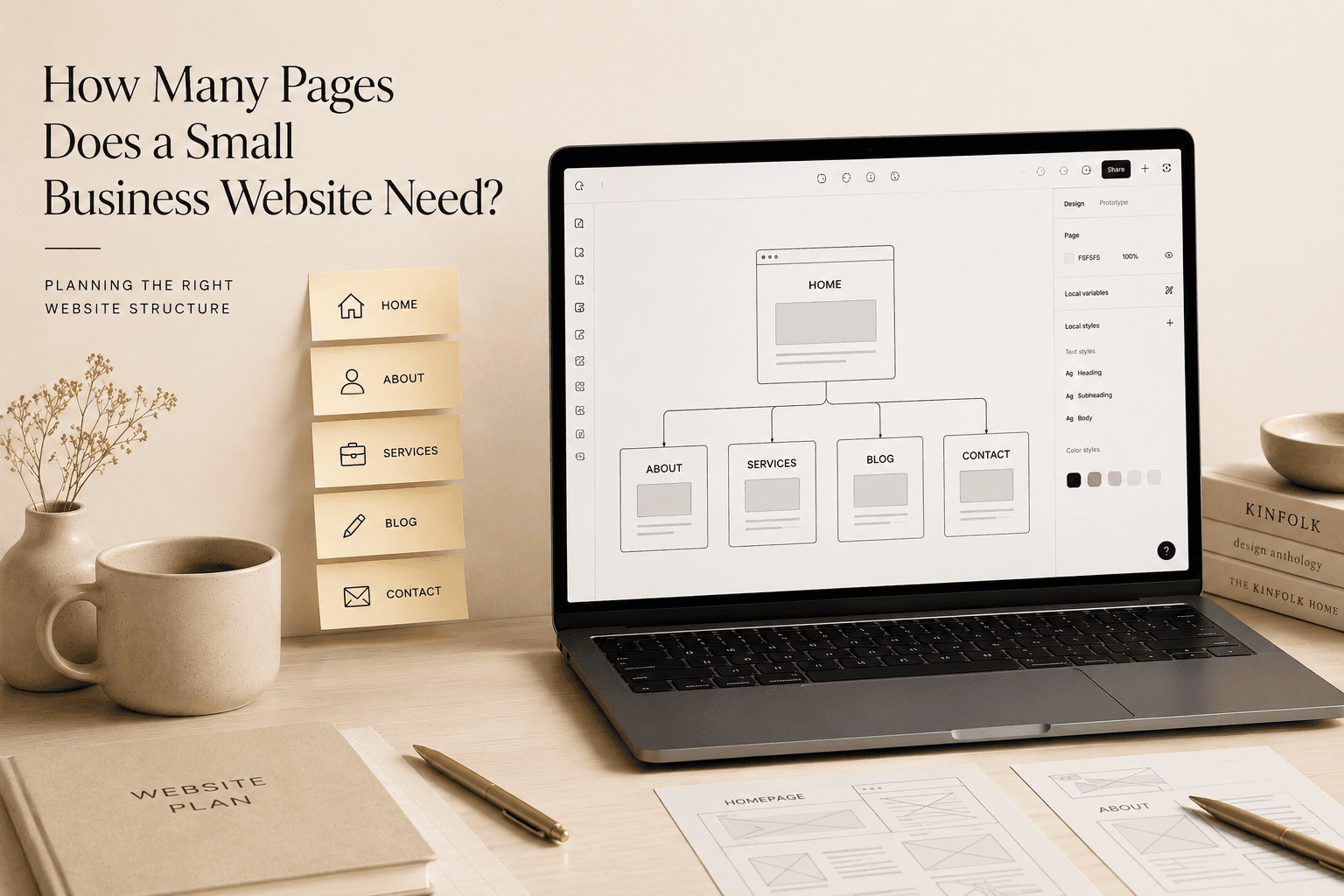
How many pages does a small business website need? It’s one of the most common questions business owners ask when planning a new website or considering a small business website redesign. While there’s no universal number that works for every business, most successful websites include a core set of pages that help visitors understand what you do, build trust in your brand, and take the next step.
The challenge is finding the right balance. Too few pages can make your website feel incomplete and limit your visibility in search engines, while too many pages can create unnecessary complexity and make navigation harder for visitors. The ideal website structure depends on your goals, services, and audience.
In this guide, we’ll explain how many pages a small business website typically needs, which pages are considered essential, and when it makes sense to add additional sections to support SEO, conversions, and long-term growth.
Key Takeaways
Most small businesses can launch with four to six core pages and expand their website over time.
The bare minimum website structure typically includes a Homepage, About Page, Services Page, and Contact Page.
Businesses that want to improve SEO should consider adding a blog and dedicated service pages.
The answer to how many pages does a small business website need depends on your services, goals, and target audience.
A well-structured website is often more effective than a larger website with unnecessary pages.
Additional pages such as FAQs, case studies, and testimonials can help build trust and improve conversions.
How Many Pages Does a Small Business Website Need to Succeed?
While every business is different, most small business websites benefit from a core set of pages that help visitors find information, build trust, and take action. Whether you're launching a new website, investing in custom web design, or planning a small business website redesign, the goal should be to create a clear structure that supports both user experience and business growth.
The pages below form the foundation of most successful small business websites and provide everything needed to establish a professional online presence.
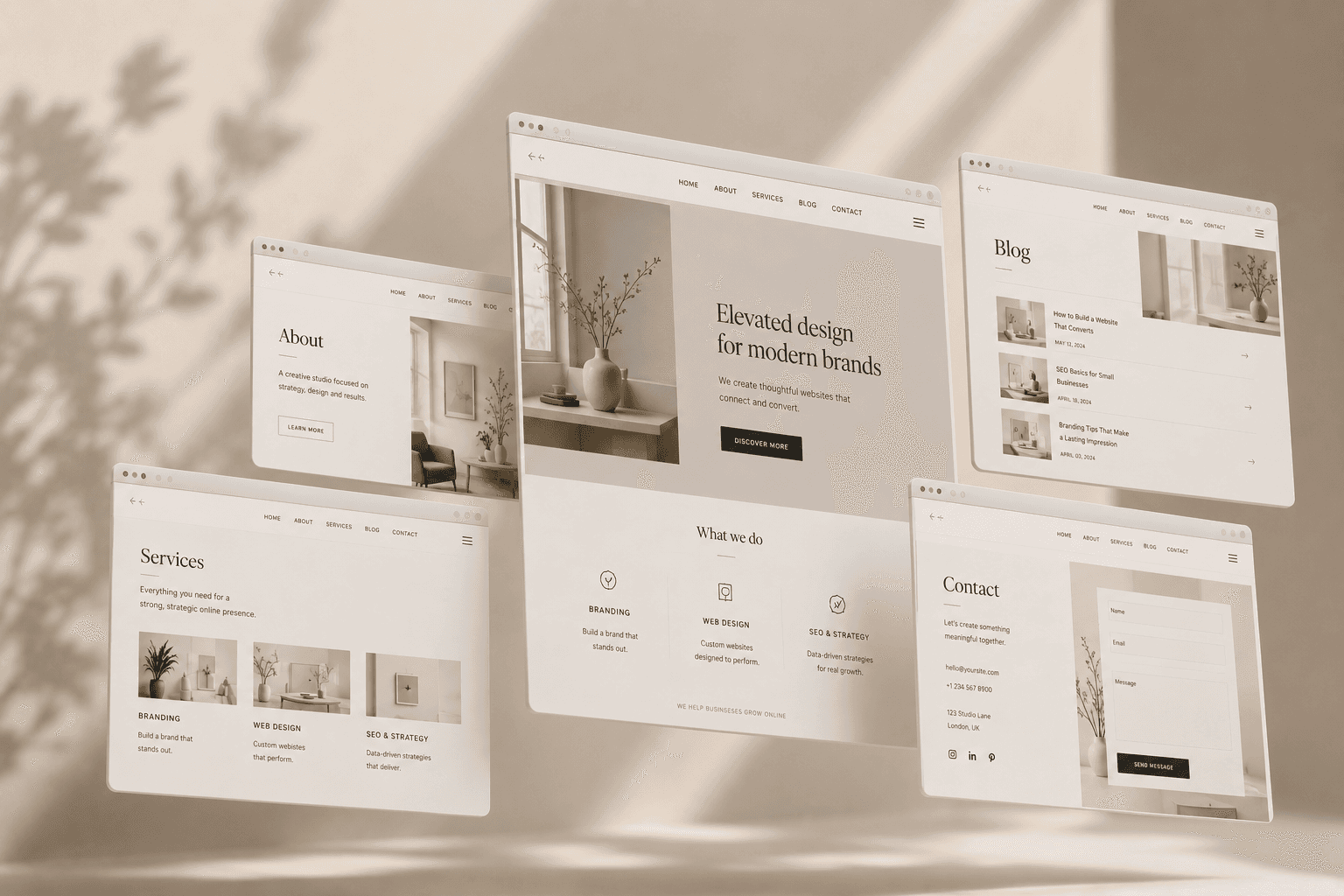
Homepage
Your homepage is usually the first page visitors see, so it needs to explain who you are, what you offer, and what someone should do next. When thinking about how many pages does a small business website need, the homepage is always part of the foundation because it connects the rest of the website together.
It should introduce your brand, guide users toward your most important sections, and create a clear path to enquiry. If you are investing in web design services or planning a small business website redesign, your homepage should feel focused, professional, and easy to navigate.
Clear value proposition: Visitors should understand what your business does within a few seconds of landing on the page.
Easy navigation: Menus and links should help users find key information without confusion.
Strong calls to action: Encourage visitors to contact you, request a quote, or learn more about your services.
Trust-building elements: Reviews, testimonials, certifications, and client logos can help establish credibility.
Mobile-friendly design: The homepage should look and function well across all devices.
About Page
An About Page gives potential customers a chance to learn more about your business, values, and the people behind the brand. While many business owners treat it as an afterthought, it is often one of the most visited pages on a website.
If you're wondering how many pages does a small business website need, an About Page should almost always be included because it helps build trust and credibility. It can also support UX design and conversion goals by helping visitors feel more confident about choosing your business over competitors.
Company story: Share how your business started and what drives your work.
Mission and values: Explain what your business stands for and what customers can expect.
Team introduction: Add photos or information about key team members where relevant.
Trust signals: Highlight experience, qualifications, awards, or industry recognition.
Personal connection: Give visitors a reason to trust your business and feel comfortable getting in touch.
Services Page
Your Services Page is where visitors decide whether your business offers the solution they are looking for. It should go beyond a simple list of services by explaining what you do, who you help, and what results customers can expect.
This page often plays a major role in generating enquiries because it connects user needs with your expertise. For example, a business owner searching for SEO web design services or considering a small business website redesign will typically review this page before deciding whether to get in touch.
Service descriptions: Clearly explain each service and what it includes.
Customer benefits: Focus on outcomes and value rather than features alone.
Relevant keywords: Optimise content around the services your target audience is searching for.
Internal links: Direct visitors to related service pages, case studies, or blog content.
Clear next steps: Include calls to action that encourage enquiries or consultations.
Contact Page
A Contact Page gives visitors a simple way to take the next step once they are ready to learn more about your business. No matter how informative the rest of your website is, people need a clear and convenient method of getting in touch.
When evaluating how many pages does a small business website need, a dedicated Contact Page is considered essential because it supports enquiries, leads, and customer communication. It can also answer common questions before someone reaches out, including practical details such as services offered, locations served, or even topics related to how much does a small business website cost.
Contact form: Make it easy for visitors to submit enquiries directly through your website.
Contact details: Include your email address, phone number, and other relevant contact information.
Business information: Display your location, service areas, and operating hours where applicable.
Trust elements: Add reviews, testimonials, or FAQs to help visitors feel confident about contacting you.
Clear expectations: Let visitors know when they can expect a response after submitting an enquiry.
Blog Page
A Blog Page can be a valuable addition for businesses that want to attract organic traffic and demonstrate expertise in their industry. While it may not be essential on day one, it often becomes one of the most important sections of a growing website.
Publishing helpful content allows you to answer customer questions, target relevant keywords, and create opportunities for internal linking. It also gives you a place to educate potential customers on topics they care about, whether they're researching industry trends, comparing options, or deciding whether a custom website or template is the right choice for their business.
SEO opportunities: Create content around topics your target audience is actively searching for.
Industry expertise: Share insights, guides, and resources that demonstrate your knowledge.
Internal linking: Connect blog posts to service pages and other relevant content throughout your website.
Fresh content: Regular updates can help keep your website active and relevant.
Long-term growth: Blog content can continue generating traffic and leads long after it is published.
FAQ Page
A FAQ Page helps answer common questions before visitors contact your business, making it easier for people to find the information they need. It can improve user experience, reduce repetitive enquiries, and help potential customers move through the decision-making process more confidently.
When considering how many pages does a small business website need, a FAQ Page is often one of the most valuable additions after the core pages are in place. It also creates an opportunity to address practical topics that customers frequently ask about, such as pricing, processes, services, or how long does it take to build a website.
Answer common questions: Provide clear answers to the questions customers ask most often.
Improve user experience: Help visitors find information quickly without needing to contact you.
Support conversions: Reduce uncertainty and remove common barriers to enquiry.
Target long-tail keywords: FAQs can help your website appear for specific search queries.
Save time: Reduce the number of repetitive emails and phone calls your business receives.
Additional Pages
Once the core pages are in place, many businesses choose to expand their website with additional sections that support marketing, SEO, and customer trust. These pages are not always necessary at launch, but they can become valuable as your business grows.
For example, a company planning a small business website redesign may decide to add case studies, testimonials, or dedicated service pages to create a stronger user experience. Additional content can also help answer common questions, such as how long does SEO take to work, while giving search engines more relevant content to index.
Dedicated service pages: Create separate pages for individual services to improve clarity and search visibility.
Case studies: Showcase real projects and results to build trust with potential customers.
Testimonials: Highlight positive customer feedback and social proof.
Portfolio pages: Display examples of your work and demonstrate your expertise.
Location pages: Help local businesses target customers in specific areas and improve local SEO.
Business Stage | Recommended Pages |
|---|---|
Basic Website | Home, About, Services, Contact |
Growth-Focused Website | Home, About, Services, Contact, Blog, FAQ |
SEO-Focused Website | Home, About, Services, Contact, Blog, FAQ, Individual Service Pages, Case Studies, Testimonials |
Why the Number of Website Pages Matters for UX and Conversions?
The number of pages on your website can have a direct impact on both user experience and conversion rates. While many business owners focus on design and content, website structure plays an equally important role in helping visitors find information and take action. When evaluating how many pages does a small business website need, the goal is not to create as many pages as possible but to create the right pages for your audience.
Too few pages can make your website feel incomplete, while too many can make navigation confusing. Whether you're investing in professional web design services or planning a small business website redesign, a clear and purposeful website structure can help visitors move through your site with confidence and improve the likelihood of generating enquiries.
Signs Your Website May Need More Pages
There is no perfect number that works for every business. However, understanding how many pages does a small business website need becomes easier when you identify gaps in your current website structure and the information available to visitors.
Visitors struggle to find information: If customers regularly contact you with questions already answered elsewhere, your website may need additional pages to organise information more effectively. A clearer structure can improve both user experience and conversions.
You offer multiple services: Listing every service on a single page can make your content difficult to navigate. Creating dedicated pages allows you to provide more detail and target relevant search terms.
Your website is not attracting organic traffic: If you've been asking yourself why my website is not showing up on Google, limited content could be part of the problem. Additional pages create more opportunities to target keywords and improve search visibility.
Your business has grown over time: Many websites start with a simple structure and expand as the business evolves. New services, locations, or customer needs often justify additional pages.
You want to build more trust with potential customers: Case studies, testimonials, and portfolio pages can help demonstrate expertise and credibility. These pages often support visitors during the decision-making process.
Important information feels crowded: When a single page tries to cover too many topics, it can become overwhelming for users. Splitting content into dedicated pages often creates a better experience for both visitors and search engines.
Recommended Page Counts by Website Type
The ideal number of pages depends on the type of website you're building and the goals you want to achieve. While every business is unique, the ranges below provide a useful starting point when planning your website structure.
Website Type | Recommended Pages | Typical Purpose |
|---|---|---|
Basic Small Business Website | 4–6 | Establish an online presence and generate enquiries. |
Growth-Focused Small Business Website | 6–10 | Support SEO, trust building, and lead generation. |
Professional Service Business | 8–15 | Showcase multiple services, FAQs, testimonials, and case studies. |
Agency or Creative Studio | 10–20 | Demonstrate expertise through portfolio work, resources, and service pages. |
E-commerce Website | 50–10,000+ | Support product categories, collections, and individual product pages. |
Enterprise Website | 50–500+ | Manage multiple departments, resources, and business units. |
These ranges should be viewed as guidelines rather than strict rules. When determining how many pages does a small business website need, it's important to focus on purpose rather than volume. Most small businesses benefit more from a focused website with well-structured pages than a larger website filled with thin or repetitive content.
While a one-page website can work for freelancers, startups, or businesses with a single service offering, it often becomes limiting as a company grows. Separate pages provide more opportunities for SEO, make navigation easier, and allow visitors to find relevant information more quickly. As your business evolves, you can gradually expand your website with additional service pages, blog content, FAQs, case studies, and other resources that support visibility, trust, and long-term growth.
Basic Small Business Website
A basic small business website is often the best starting point for new businesses, freelancers, and local service providers. In most cases, four to six pages are enough to establish credibility and generate enquiries. If you're wondering how many pages does a small business website need, this structure provides the essentials without adding unnecessary complexity.
A homepage, about page, services page, and contact page will cover the core information visitors expect to find. As your business grows, you can expand your website with additional pages that support SEO and customer education.
Growth-Focused Small Business Website
Businesses that want to attract more organic traffic and generate a steady flow of enquiries often benefit from a larger website structure. In addition to the core pages, a growth-focused website may include a blog, FAQ section, dedicated service pages, and customer testimonials.
These pages provide more opportunities to target relevant keywords and answer customer questions. While not every business needs a large website immediately, adding strategic pages over time can support long-term marketing goals and improve visibility in search engines.
Professional Service Business Website
Professional service businesses typically require more pages than a basic website because they need to explain their expertise, services, and processes in greater detail. Industries such as web design, consulting, legal services, and accounting often benefit from dedicated service pages and case studies.
Businesses offering custom web design services, for example, may create separate pages for website design, SEO, and conversion optimisation. This approach helps visitors find relevant information while giving search engines a better understanding of the services offered.
Agency or Creative Studio Website
Creative studios and agencies often rely on content to demonstrate expertise and build trust with potential clients. When considering how many pages does a small business website need in this industry, the answer is usually higher than average.
In addition to core pages, agencies often include portfolio sections, case studies, service pages, testimonials, blog content, and resource hubs. These additional pages help showcase experience, support SEO efforts, and create more opportunities for visitors to engage with the business.
E-commerce Website
E-commerce websites typically require far more pages than service-based businesses because every product, category, and collection adds to the website structure. Even a relatively small online store can quickly exceed 100 pages.
Product descriptions, category pages, FAQs, shipping information, and customer support resources all contribute to the total page count. For online retailers, website growth is often directly connected to inventory expansion and product diversification.
Enterprise Website
Large organisations often manage dozens or even hundreds of pages across multiple departments, locations, and service areas. Enterprise websites may include dedicated sections for investors, careers, resources, media, support, and individual business units.
Unlike smaller websites, enterprise platforms require a highly organised structure to ensure users can easily navigate large amounts of information. As a result, website architecture becomes a critical part of both user experience and long-term scalability.
How Many Pages Does a Small Business Website Need for SEO?
The number of pages on your website can influence how much visibility you gain in search engines. While simply adding pages won't guarantee higher rankings, each page creates an opportunity to target additional keywords, answer customer questions, and attract relevant traffic.
A website with only a few pages may struggle to compete against businesses that provide more comprehensive information. This is one reason why many businesses invest in a small business website redesign as they grow. Additional pages also allow you to cover topics your audience is actively searching for, including common questions such as whether you need a website if you already have social media. The key is to focus on quality, relevance, and user value rather than publishing pages purely for the sake of increasing page count.
More keyword opportunities: Each page can target different search terms and topics relevant to your business.
Stronger website structure: A larger collection of well-organised pages helps search engines understand your website.
Better internal linking: Additional pages create more opportunities to connect related content and services.
Improved topical authority: Covering a wider range of relevant subjects can strengthen your expertise signals.
More entry points from Google: Visitors can discover your business through multiple pages rather than a single homepage.
Greater long-term SEO potential: New pages allow your website to grow alongside your business and marketing goals.
Common Mistakes Small Businesses Make When Planning Website Pages
Choosing the right website structure is just as important as deciding how many pages to include. While there is no perfect formula, many businesses make avoidable mistakes that limit SEO performance, create confusion for visitors, or reduce conversions.
Understanding how many pages does a small business website need is only part of the process. It's equally important to ensure every page serves a purpose. Whether you're launching a new website or planning a small business website redesign, avoiding the mistakes below can help create a stronger foundation for long-term growth.
Creating pages without a clear purpose: Every page should support a business goal or answer a customer question. Pages that exist solely to increase page count rarely provide value to users or search engines.
Combining multiple services on one page: Grouping several services together can make content difficult to navigate. Separate service pages often improve clarity and create more opportunities to target relevant keywords, especially for businesses offering SEO web design services.
Ignoring user experience: Website structure should always support UX design principles. If visitors struggle to find information, they are more likely to leave without making an enquiry.
Cluttered page layouts: Trying to fit too much information onto a single page can overwhelm visitors. Clear page structures and visual hierarchy make content easier to navigate and understand.
Slow-loading pages: Website speed has a direct impact on both user experience and search visibility. If pages take too long to load, visitors may leave before they even engage with your content.
No clear calls to action: Visitors should always know what action to take next. Whether it's requesting a quote, making an enquiry, or contacting your business, clear CTAs help guide users through the website.
Not mobile-friendly: A large percentage of website traffic now comes from mobile devices. If your pages don't work properly on smaller screens, you risk losing potential customers.
Combining multiple services on one page: Grouping several services together can make content difficult to navigate. Separate service pages often improve clarity and create more opportunities to target relevant keywords.
Adding too many pages too quickly: More pages are not always better. A smaller collection of high-quality pages is usually more effective than publishing large amounts of thin or repetitive content.
How Many Pages Does a Small Business Website Need?
There is no single answer that works for every business, but most small business websites benefit from starting with a strong foundation of core pages and expanding over time as their needs evolve. When deciding how many pages does a small business website need, it's important to focus on quality, purpose, and user experience rather than page count alone.
A well-structured website helps visitors find information, builds trust, and creates more opportunities for SEO and conversions. Whether you're launching a new website or improving an existing one, the right mix of pages can support both short-term goals and long-term business growth.
Frequently Asked Questions
How many pages does a small business website need?
Most small business websites need between four and ten pages, depending on their goals, services, and marketing strategy. A basic website can succeed with a homepage, about page, services page, and contact page, while businesses focused on SEO and growth often benefit from additional pages such as blogs, FAQs, testimonials, and dedicated service pages.
What are the 7 C's of a website?
The 7 C's of a website are a framework used to evaluate how effectively a website serves its visitors and supports business goals. They include Context (the website's design and structure), Content (the information provided), Community (user interaction), Customisation (personalised experiences), Communication (how the website engages with users), Connection (links to other resources or platforms), and Commerce (the ability to support transactions or conversions).
Together, these elements help create a website that is easy to navigate, informative, and user-friendly. While not every website needs to focus equally on all seven areas, a strong balance between them can improve user experience, build trust, and encourage visitors to take action.
Do I need a blog on my small business website?
A blog is not always essential, but it can be one of the most effective ways to improve SEO and demonstrate expertise. Regularly publishing helpful content allows you to target relevant keywords, answer customer questions, and attract organic traffic over time.
What is the 3-second rule in website design?
The 3-second rule suggests that visitors should be able to understand what your business does and find a clear next step within the first few seconds of arriving on your website. If users are confused or overwhelmed, they are more likely to leave without exploring further.
Should each service have its own page?
In most cases, yes. Dedicated service pages make it easier for visitors to find relevant information and help search engines understand the topics your website covers. They also create more opportunities to target specific keywords and improve search visibility.
How do I know when it's time to add more pages?
You may need additional pages if your business has expanded, you offer new services, or visitors struggle to find important information. Growing websites often benefit from adding FAQs, blog posts, case studies, testimonials, and dedicated service pages that support both user experience and SEO.
BLOG