Is SEO Worth It for Small Businesses in 2026? A Realistic Guide
7 MINUTES READ
14 JUNE 2026

If you're wondering is SEO worth it for small businesses in 2026, the short answer is that it depends on your goals, competition, and willingness to invest in long-term growth. Unlike paid advertising, SEO focuses on building sustainable visibility that can continue generating traffic and enquiries over time.
For many businesses, the strongest results come when SEO is combined with effective small business web design, high-quality content, and a user-friendly website experience. In this guide, we'll explore whether SEO is worth it for small businesses, what results you can realistically expect, and when it makes sense to invest in it.
Key Takeaways
SEO can help small businesses increase visibility, attract qualified traffic, and generate enquiries over time.
Unlike paid advertising, SEO continues delivering value long after content is published and optimised.
Businesses with a well-structured website and strong content strategy often see the best results from SEO.
Is SEO worth it for small businesses? For many, it can be one of the most cost-effective long-term marketing investments.
SEO requires consistency and patience, as meaningful results typically take months rather than weeks.
Combining SEO with quality web design, user experience, and conversion-focused content can maximise return on investment.
What Is SEO?
SEO, or search engine optimisation, is the process of improving a website's visibility in search engine results so potential customers can find your business online. If you're wondering is SEO worth it for small businesses, it helps to first understand how SEO works.
It involves a combination of content creation, technical improvements, keyword targeting, and strategies such as on-page SEO to help search engines better understand your website. SEO also works closely with factors like user experience and small business website redesign projects, which can improve both visibility and conversions. For businesses struggling with issues such as why my website isn't showing up on Google, SEO is often an important part of the solution.
What Does SEO Actually Mean for Small Businesses?
For small businesses, SEO is about making it easier for potential customers to find your products or services when searching online. If you're asking is SEO worth it for small businesses, it's important to understand that SEO goes beyond rankings alone.
It involves creating relevant content, improving website performance, and ensuring search engines can understand your pages. SEO also works closely with factors such as small business website redesign projects, SEO web design services, and UX design, all of which can improve visibility, user experience, and conversions. The most effective SEO strategies focus on both attracting visitors and turning them into customers.
SEO Can Generate Consistent Organic Traffic
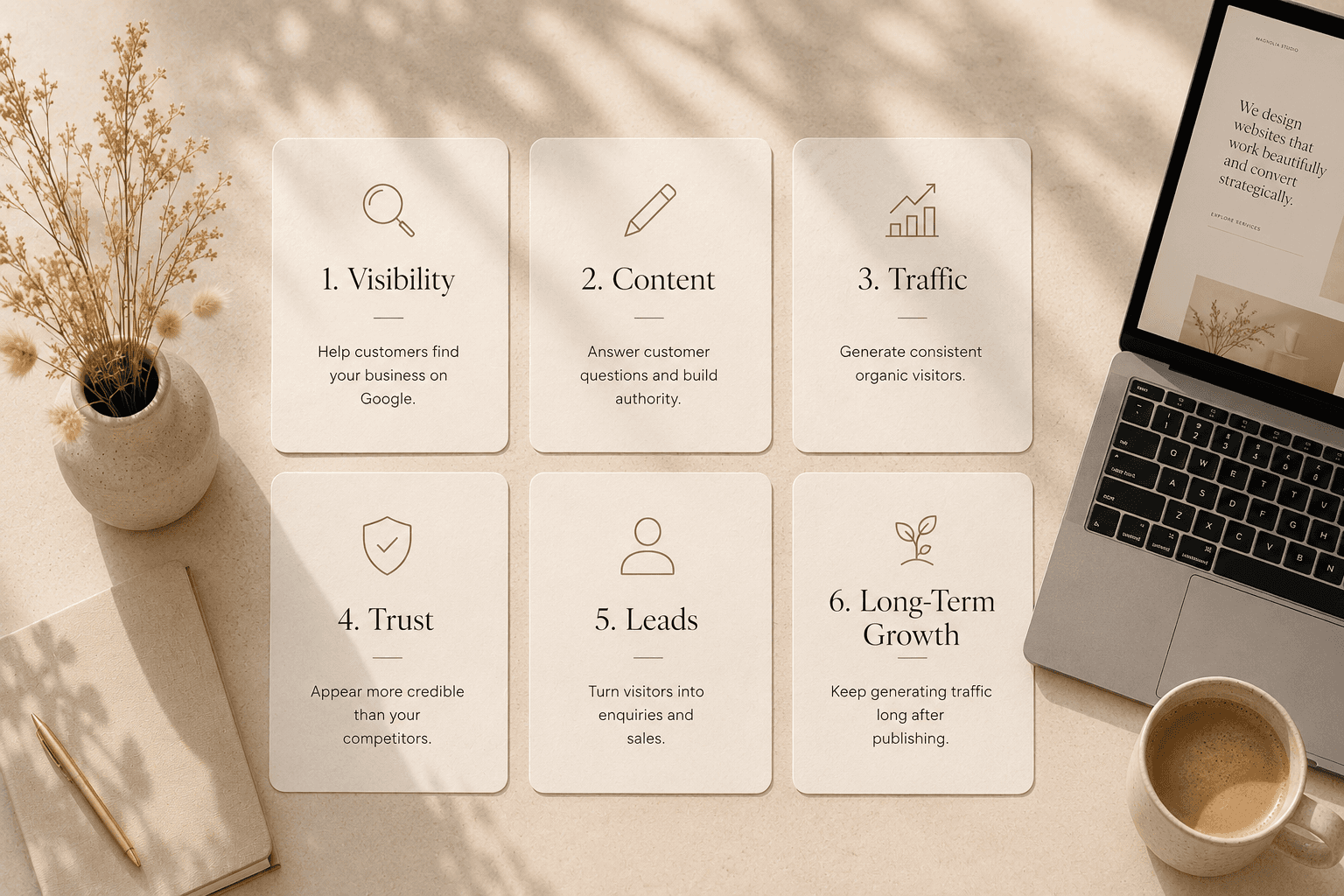
One of the biggest advantages of SEO is its ability to generate consistent organic traffic over time. Unlike paid advertising, where visibility stops when the budget runs out, well-optimised content can continue attracting visitors for months or even years. This is one reason why is SEO worth it for small businesses remains such a common question among business owners. However, traffic alone is not enough.
Combining SEO with custom web design services, a strategic small business website redesign, and conversion-focused improvements can help turn visitors into enquiries. This is especially important for businesses wondering why my website isn't generating leads despite receiving traffic.
SEO Supports Long-Term Business Growth
SEO is often most effective when viewed as a long-term investment rather than a quick marketing tactic. While many business owners ask is SEO worth it for small businesses, the answer often depends on their expectations and timeline. Unlike paid campaigns, SEO builds momentum gradually, which is why understanding how long does SEO take to work is important before getting started.
Over time, consistent optimisation can increase visibility, attract qualified visitors, and support sustainable growth. When combined with effective small business web design, SEO can help create a stronger online presence that continues delivering value long after initial improvements are made.
SEO Works Best Alongside a Well-Designed Website
SEO and website design are most effective when they work together. Even if a website starts attracting visitors through search engines, poor navigation, slow loading times, or unclear messaging can limit results. This is one reason whether SEO is worth it for small businesses often depends on the quality of the website itself.
Investing in web design for small businesses can improve user experience, trust, and conversions, helping businesses get more value from their SEO efforts. Just as business owners often ask how long does it take to build a website, it's important to remember that building long-term online visibility also requires time, planning, and ongoing improvements.
SEO Helps Build Trust and Credibility
Trust plays a major role in how potential customers choose between businesses online. For many companies, the question isn't simply is SEO worth it for small businesses, but whether it can help establish credibility in a competitive market. Appearing in relevant search results, publishing helpful content, and maintaining a professional website can all contribute to stronger trust over time.
SEO also works alongside factors such as web design for small businesses, user experience, and website performance. Businesses researching topics such as how much does a small business website cost are often comparing providers, making trust and credibility important factors in their final decision.
Is SEO Worth It for Small Businesses in 2026?
For many businesses, the answer is yes. However, the value of SEO depends on your goals, competition, website quality, and willingness to invest in long-term growth. While is SEO worth it for small businesses remains a common question, the reality is that SEO is often one of the most sustainable ways to attract qualified traffic and generate enquiries over time.
Unlike paid advertising, SEO continues building momentum as your website grows. It also works best when combined with factors such as a strategic small business website redesign, quality content, and a strong user experience. Businesses researching how to choose the right web designer for your small business should also consider whether their website is built to support long-term SEO success rather than short-term visibility alone.
Business Type | Is SEO Worth It? |
|---|---|
Local service businesses | Yes |
Professional services | Yes |
Small business websites | Yes |
E-commerce stores | Usually yes |
New businesses | Yes, but expect a longer timeline |
Businesses needing immediate leads | Best combined with paid advertising |
Highly competitive industries | Yes, but requires patience and ongoing investment |
SEO vs Paid Advertising: Which Is Better for Small Businesses?
Both SEO and paid advertising can help small businesses attract customers, but they work in different ways. SEO focuses on building long-term visibility in search results, while paid advertising delivers immediate exposure for as long as the advertising budget remains active. When business owners ask is SEO worth it, the answer often depends on their goals and timeline.
SEO can provide sustainable traffic and long-term growth, whereas paid advertising is often better for generating faster results. It's also important to remember that traffic alone is not enough. Factors such as what makes a website look professional, user experience, and technical performance all influence results. For example, issues such as why my website is so slow can reduce the effectiveness of both SEO and paid advertising efforts.
SEO | Paid Advertising |
|---|---|
Builds long-term visibility | Delivers immediate visibility |
Traffic can continue growing over time | Traffic stops when the budget stops |
Builds authority and trust | Focuses on immediate exposure |
Requires patience and consistency | Produces faster results |
Often lower long-term acquisition costs | Ongoing advertising costs |
Supports sustainable growth | Best for short-term campaigns and promotions |
Why Local SEO Matters for Small Businesses?
For many small businesses, local SEO can be one of the most valuable parts of an overall SEO strategy. When people search for services in a specific location, search engines often prioritise businesses with strong local relevance, accurate business information, and well-optimised websites.
For example, someone searching for web design services in Sydney or Melbourne is more likely to see businesses that have established local signals and relevant content for those areas. Local SEO can help companies appear in local search results, map listings, and location-based searches made by potential customers. When combined with quality content, a professional website, and strong user experience, local SEO can increase visibility among people who are actively looking for your services.
Google Business Profile Plays a Key Role
Google Business Profile is an important part of local SEO, especially for businesses that serve customers in specific locations. When potential customers search for nearby services, a well-optimised profile can improve visibility in Google Maps and local search results.
For businesses asking is SEO worth it for small businesses, local visibility is often one of the biggest benefits. For example, someone searching for web design services in Sydney or Melbourne is more likely to discover businesses with strong local signals, accurate information, and positive reviews. Combined with on-page SEO and professional small business web design services, Google Business Profile can help businesses attract more relevant local enquiries and strengthen their online presence.
Local SEO Works Best With a Strong Website
Local SEO can help potential customers discover your business, but your website plays a major role in turning that visibility into enquiries. Strong local rankings matter more when visitors land on a website that feels professional, loads quickly, and clearly explains what you offer.
This is where SEO and website quality overlap. A strategic small business website redesign can improve structure, user experience, and conversion paths, making it easier for local visitors to take the next step. For many small businesses, SEO is worth the investment when the website is also designed to build trust and convert traffic into real enquiries.
Local SEO Helps Attract More Relevant Leads
One of the biggest advantages of local SEO is that it helps businesses reach people who are actively searching for specific services in a specific location. Unlike broad marketing campaigns, local SEO focuses on attracting visitors who are often closer to making a decision.
This is one reason many business owners consider is SEO worth it for small businesses when looking for sustainable ways to generate enquiries. However, visibility alone is not enough. Once visitors arrive on your website, factors such as user experience, credibility, and messaging become important. Even decisions such as choosing a custom website vs template can influence how effectively a website converts local traffic into leads.
What Results Can Small Businesses Realistically Expect From SEO?
The results of SEO vary depending on factors such as competition, website quality, and consistency. While is SEO worth it for small businesses is a common question, most businesses should expect gradual improvements rather than overnight success.
Over time, SEO can increase visibility, attract qualified traffic, and generate more enquiries. When combined with effective small business web design, SEO can also improve user experience and support long-term business growth.
Increased visibility in search results: As search engines gain a better understanding of your website, more pages may begin appearing for relevant searches. This can help potential customers discover your business at different stages of their decision-making process.
More qualified organic traffic: SEO focuses on attracting visitors who are actively searching for products, services, or information related to your business. These visitors often have stronger intent than people reached through broader marketing channels.
Better quality enquiries and leads: Increased traffic alone is not always the goal. By targeting relevant keywords and creating useful content, SEO can help attract visitors who are more likely to contact your business or request a quote.
Stronger brand authority and credibility: Consistently appearing in search results can help establish trust with potential customers. Helpful content and a professional website experience can reinforce that credibility over time.
Improved local visibility: Businesses targeting specific locations can benefit from appearing in local search results and map listings. This can help connect services with nearby customers who are actively looking for solutions.
Long-term growth rather than short-term spikes: Unlike many forms of advertising, SEO can continue generating visibility and traffic long after content is published. When supported by strong small business web design, these results can contribute to sustainable business growth over time.
Short-Term vs Long-Term SEO Benefits
Many business owners researching is SEO worth it for small businesses focus only on rankings and traffic. However, SEO can provide both short-term and long-term benefits. While some improvements can be seen relatively quickly through better website structure, content, and user experience, the strongest SEO results often develop gradually as visibility, authority, and organic traffic grow over time.
Short-Term SEO Benefits | Long-Term SEO Benefits |
|---|---|
Improved website structure and organisation | Sustainable organic traffic growth |
Better on-page SEO and content optimisation | Increased visibility for valuable keywords |
Enhanced user experience and navigation | More qualified leads and enquiries |
Faster website performance | Stronger brand authority and trust |
Improved local search visibility | Lower long-term customer acquisition costs |
Better understanding of customer search behaviour | Consistent business growth over time |
SEO Is Expanding Beyond Traditional Search
SEO continues to evolve as search engines introduce new ways for people to discover information online. While is SEO worth it for small businesses remains a common question, modern SEO now extends beyond traditional search rankings. Businesses are increasingly optimising content for AI-powered search experiences, featured snippets, and conversational search results.
One emerging concept is AEO (Answer Engine Optimisation), which focuses on creating content that directly answers user questions. The goal is to increase visibility in AI-generated answers, featured snippets, and other search features that provide information without requiring users to click through multiple pages.
Another growing concept is GEO (Generative Engine Optimisation). GEO focuses on helping content appear within AI-generated responses produced by large language models and generative search experiences. This often involves creating authoritative, well-structured content supported by strong topical relevance and effective on page SEO.
Although the terminology continues to evolve, the core principle remains the same; creating helpful, trustworthy content that answers real user questions and provides genuine value.
When SEO Might Not Be Worth It?
Although SEO can be a valuable long-term investment, it is not always the right first step for every business. While is SEO worth it for small businesses is a common question, the answer depends on your goals, timeline, and available resources. For example, businesses that need enquiries immediately may benefit from combining SEO with paid advertising rather than relying on SEO alone.
SEO may also be less effective if a website is outdated, poorly structured, or provides a poor user experience. In these situations, investing in web design for small businesses before focusing heavily on SEO can often deliver better results. The strongest SEO outcomes usually come from combining optimisation with a high-quality website and a long-term growth strategy.
Common SEO Mistakes Small Businesses Make
Even when businesses invest in SEO, certain mistakes can limit results and slow progress. Successful search engine optimisation requires consistency, realistic expectations, and a website that supports long-term growth. Understanding these common issues can help businesses get more value from their SEO efforts and avoid unnecessary setbacks.
Expecting immediate results: SEO is a long-term strategy, and meaningful improvements often take months rather than weeks. Businesses that expect instant rankings or leads may become discouraged before results have time to develop.
Ignoring website quality: A website that is difficult to navigate, slow to load, or poorly structured can affect both user experience and SEO performance. In some cases, a small business website redesign may be necessary before significant SEO improvements can be achieved.
Neglecting on-page SEO: Search engines rely on page titles, headings, content structure, and other signals to understand a website. Even high-quality content can struggle to perform if these elements are not properly optimised.
Focusing only on rankings: Higher rankings can be valuable, but they are not the only measure of success. Traffic, enquiries, conversions, and overall business growth are often more meaningful indicators of SEO performance.
Publishing very little content: Businesses that rarely update their websites may miss opportunities to improve visibility and demonstrate expertise. Consistent, helpful content can support both rankings and trust.
Overlooking local SEO opportunities: Many small businesses rely on local customers, yet fail to optimise their Google Business Profile or location-specific content. This can limit visibility in local search results.
Treating SEO as a one-time project: SEO requires ongoing attention as search trends, competition, and customer behaviour change over time. Businesses that continue improving their websites are often better positioned for long-term growth.
For many businesses, the decision about whether SEO is worth it for small businesses ultimately depends on avoiding these common mistakes and maintaining a consistent long-term approach.
How Much Do SEO Services Cost for Small Businesses?
The cost of SEO services can vary significantly depending on the scope of work, competition, and business goals. Some businesses invest in one-time SEO audits, while others choose ongoing monthly SEO services that include content creation, technical improvements, and performance monitoring.
Pricing can range from a few hundred dollars per month to several thousand, depending on the level of support required. When considering these costs, many business owners naturally start asking themselves; is SEO worth it for small businesses? The answer often depends on the value of the leads, traffic, and long-term visibility SEO can generate compared to other marketing channels. Rather than focusing solely on cost, it is important to evaluate the potential return on investment over time.
SEO Service Type | Typical Cost Range |
|---|---|
One-Time SEO Audit | $300 – $2,000+ |
Local SEO Services | $300 – $1,500+ per month |
Monthly SEO Services | $500 – $5,000+ per month |
SEO Content Creation | $100 – $1,000+ per piece |
Technical SEO Projects | $500 – $10,000+ |
Enterprise SEO Campaigns | $5,000+ per month |
What Types of Small Businesses Benefit Most From SEO?
SEO is often most valuable for businesses whose customers actively search online before making a decision. Instead of asking only is SEO worth it for small businesses, it helps to look at whether people are already searching for the services, products, or information that business provides.
With strong small business web design and occasional small business website redesign improvements, SEO can help turn that search demand into visibility, trust, and enquiries.
Service-Based Businesses: Consultants, agencies, designers, tradespeople, and other service providers often benefit from SEO because customers usually research options before making contact. This is especially useful when people compare providers based on expertise, portfolio quality, pricing, and trust.
Healthcare and Wellness Businesses: Dentists, physiotherapists, clinics, personal trainers, and wellness professionals can use SEO to attract people searching for nearby services. Local visibility matters because many customers want providers close to where they live or work.
Professional Services: Lawyers, accountants, architects, and financial advisors often rely on credibility and authority. SEO can help these businesses appear when potential clients are researching services, comparing providers, or looking for educational guidance before booking a consultation.
Home Services Businesses: Electricians, plumbers, builders, landscapers, and cleaning companies can benefit from location-based searches. Someone searching for urgent or practical services in Sydney, Melbourne, or the Gold Coast is often much closer to making an enquiry than someone casually browsing.
Hospitality and Tourism Businesses: Hotels, restaurants, tour operators, and travel-related businesses can use SEO to appear during destination research. Travellers planning trips often begin with search engines before choosing where to stay, eat, or book experiences.
E-Commerce Businesses: Online stores can benefit from SEO by targeting product searches, buying guides, and comparison keywords. This can help attract customers at different stages of the buying journey, from early research to purchase-ready searches.
Alternatives to SEO for Small Businesses
While SEO can be an effective long-term marketing strategy, it is not the only way for small businesses to attract customers. In fact, when business owners ask is SEO worth it, the best answer often depends on their goals, budget, timeline, and target audience.
Depending on the situation, other marketing channels may deliver faster or more appropriate results.
Paid Advertising: Paid advertising can generate visibility, website traffic, and enquiries much faster than SEO. While results typically stop when the advertising budget runs out, it can be a useful option for businesses launching new services or needing immediate leads.
Social Media Marketing: Platforms such as Instagram, TikTok, Facebook, and LinkedIn can help businesses build awareness and connect directly with potential customers. Success often depends on consistent content creation, audience engagement, and platform-specific strategies.
Referral Marketing: Word-of-mouth recommendations remain one of the most effective marketing channels for many small businesses. Satisfied customers can often become a reliable source of referrals and repeat business.
Email Marketing: Email campaigns can help businesses stay connected with existing customers, promote offers, and encourage repeat purchases. Unlike SEO, email marketing focuses on people who are already familiar with the business.
Partnerships and Networking: Building relationships with complementary businesses, industry professionals, and local communities can create valuable opportunities for referrals and collaboration. For some businesses, these relationships can be just as important as online visibility.
How to Get Started With SEO?
Getting started with SEO does not need to be complicated. While many business owners wonder is SEO worth it for small businesses, the best approach is often to focus on a few key fundamentals before investing in more advanced strategies.
Building a strong website, understanding your audience, creating helpful content, and improving visibility over time can provide a solid foundation for long-term growth.
Start With a Strong Website
SEO works best when it is supported by a website that is easy to navigate, fast to load, and designed with users in mind. Businesses with outdated websites may benefit from a small business website redesign before investing heavily in SEO. A strong foundation makes it easier for both search engines and potential customers to understand what your business offers.
Focus on User Experience
Search engines increasingly prioritise websites that provide a positive user experience. Elements such as page speed, navigation, mobile responsiveness, and clear calls to action can all influence performance. Investing in custom web design can help businesses create a website that not only attracts visitors but also encourages them to take the next step.
Optimise Your Pages
One of the most important SEO fundamentals is ensuring that individual pages are properly structured and optimised. Effective on-page SEO helps search engines understand your content while making it easier for visitors to find relevant information. This includes optimising page titles, headings, content structure, and internal links.
Create Helpful Content
Content plays an important role in helping businesses improve visibility and demonstrate expertise. Publishing useful articles, answering common customer questions, and creating relevant service pages can help attract qualified visitors over time. Consistent content creation also provides more opportunities to target valuable search terms.
Stay Consistent
SEO is rarely a one-time task. Search trends, competitors, and customer behaviour change over time, making ongoing improvements important for long-term success. Businesses that consistently update and refine their websites are often better positioned to benefit from sustainable organic growth.
Final Thoughts: Is SEO Worth It for Small Businesses?
For many businesses, the answer is yes. Throughout this guide, we've explored what SEO is, how search engine optimisation works, the differences between SEO and paid advertising, the importance of local SEO, realistic expectations, common mistakes, costs, and alternative marketing strategies. While SEO is not a quick fix, it can be a valuable long-term investment for businesses looking to increase visibility, attract qualified traffic, and generate enquiries over time.
The most successful SEO strategies typically combine high-quality content, effective on-page SEO, a strong user experience, and a website designed to support business goals. This is why web design for small businesses often plays an important role alongside SEO efforts. Ultimately, is SEO worth it for small businesses depends on the business itself, but for those willing to invest consistently, SEO can become a sustainable source of growth and long-term online visibility.
Frequently Asked Questions
Is SEO worth it for small businesses?
For many small businesses, SEO can be a valuable long-term investment. It can help improve visibility, attract qualified traffic, and generate enquiries from people actively searching for relevant products or services. While results typically take time, SEO can continue delivering value long after the initial work has been completed.
How long does SEO take to work?
SEO is a long-term strategy, and results rarely happen overnight. Some businesses may notice improvements within a few months, but meaningful growth often takes longer depending on competition, website quality, and the scope of the SEO strategy. Consistency is usually one of the most important factors.
Is SEO dead or evolving in 2026?
SEO is not dead, but it is continuing to evolve. Search engines are becoming more sophisticated, and factors such as content quality, user experience, expertise, and search intent are increasingly important. Businesses that focus on creating helpful content and providing a strong website experience can still benefit significantly from SEO.
What Is the 80/20 Rule of SEO?
The 80/20 rule of SEO suggests that a relatively small number of activities often generate the majority of results. For many businesses, focusing on high-quality content, relevant keywords, technical fundamentals, and user experience can have a greater impact than chasing every SEO tactic or trend.
Will AI Replace SEO?
AI is changing how content is created and how people search for information, but it is unlikely to replace SEO entirely. Search engines still need ways to understand, organise, and rank content. Businesses that combine AI tools with high-quality content, expertise, and strategic optimisation are likely to be in the strongest position.
Will SEO Exist in 5 Years?
SEO will likely continue to exist, although it may look different from today's approach. As search technology evolves, businesses will still need ways to improve visibility, reach potential customers, and provide relevant information. The tactics may change, but the need to be discoverable online is unlikely to disappear.
BLOG