How to Choose the Right Web Designer for Your Small Business?
7 MINUTES READ
12 JUNE 2026

Choosing the right web designer for your small business can have a significant impact on your brand, online visibility, and long-term growth. With countless freelancers, agencies, and website builders available, many business owners struggle to know which option is the right fit for their goals.
Whether you're planning a new website, investing in custom web design, or considering a small business website redesign, selecting the right designer is about more than visual appearance alone. The best websites combine strategy, user experience, performance, and search engine optimisation to support real business results.
In this guide, you'll learn how to choose the right web designer for your small business and what to look for before making a decision.
How to Choose the Right Web Designer for Your Small Business?
Understanding how to choose the right web designer for your small business starts with knowing what factors actually influence the success of a website project.
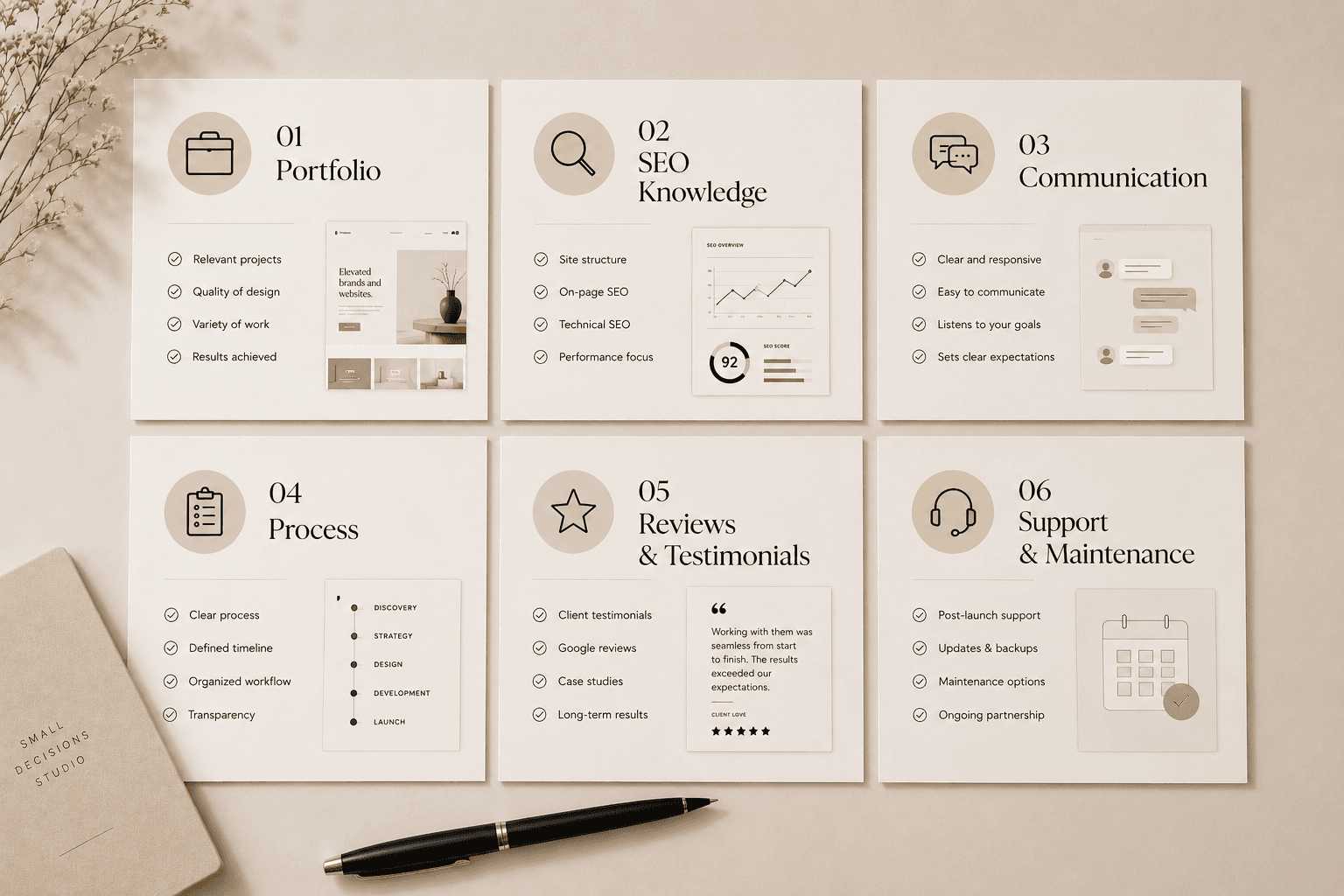
Whether you're investing in professional web design services or planning a small business website redesign, looking beyond visual design is essential. From portfolio quality and SEO knowledge to communication and ongoing support, the right designer should offer a combination of skills that align with your business goals and long-term growth.
1. Portfolio Quality and Relevant Experience
One of the first things to review when learning how to choose the right web designer for your small business is their portfolio. A strong portfolio demonstrates not only visual design skills but also the ability to solve real business problems through effective website design. Look for projects that are similar to your industry, target audience, or business goals.
Pay attention to how websites are structured, whether they are mobile-friendly, and how professionally they present information. A designer's previous work can reveal a lot about their design approach, attention to detail, and overall quality. It can also help you understand whether their style aligns with your vision before discussing topics such as custom website vs template solutions or how much does a small business website cost.
What to review:
Relevant projects and industries
Visual design quality
Mobile responsiveness
User experience and navigation
Variety of website styles
Clear business-focused outcomes
Recent and up-to-date work
2. Understanding of Your Brand and Business Goals
A professional website should do more than look attractive; it should support your business objectives. When considering how to choose the right web designer for your small business, pay attention to whether they take time to understand your brand, target audience, and long-term goals before discussing design solutions.
The best designers ask questions about your services, customers, competitors, and growth plans. This strategic approach helps create a website that reflects your brand and supports meaningful business outcomes. Whether you're planning a small business website redesign or trying to understand why your website isn't generating leads, a designer who focuses on business goals rather than aesthetics alone is far more likely to deliver lasting value.
What to review:
Interest in your business goals
Understanding of your target audience
Ability to align design with your brand
Strategic thinking beyond visual design
Questions asked during discovery
Focus on conversions and enquiries
Recommendations tailored to your business
3. Knowledge of UX Design and User Experience
A visually appealing website is important, but appearance alone does not guarantee results. One factor that is often overlooked when choosing the right web designer for your small business is their understanding of UX design and how visitors interact with a website.
A designer should think beyond colours and layouts to create a clear, intuitive experience that helps users find information, build trust, and take action. Strong UX design can improve engagement, reduce frustration, and increase enquiries. The best custom web design projects combine attractive visuals with strategic user journeys that guide visitors toward meaningful actions and support overall business goals.
What to review:
Clear and intuitive navigation
Mobile-friendly user experience
Logical page structure
Effective calls to action
User-focused design decisions
Accessibility considerations
Focus on conversions and engagement
4. SEO Knowledge and Website Performance
A website that looks great but cannot be found in search results will struggle to generate long-term traffic and enquiries. That's why SEO knowledge is an important factor to consider when learning how to choose the right web designer for your small business.
While not every designer offers dedicated SEO services, they should understand the fundamentals of technical SEO, website structure, page speed, and content hierarchy. Many businesses investing in a small business website redesign overlook these foundations and later discover that their website is difficult for search engines to understand. Designers who provide SEO web design services can help ensure your website is built with visibility, performance, and long-term growth in mind from the start.
What to review:
Understanding of technical SEO
Website speed and performance optimisation
Mobile-friendly design practices
Proper page structure and hierarchy
On-page SEO fundamentals
Core Web Vitals awareness
Experience with SEO-focused websites
5. Evaluate the Designer's Own Website
A web designer's website can reveal a lot about the quality of their work, attention to detail, and overall professionalism. When considering how to choose the right web designer for your small business, take time to review their own website as if you were a potential customer.
Is the website easy to navigate? Does it load quickly? Is the messaging clear and professional? A strong website should answer common questions, showcase previous work, and create a positive user experience. It can also provide insight into topics such as how long does it take to build a website and how many pages does a small business website need, both of which are common considerations for small business owners.
What to review:
Website speed and performance
Mobile responsiveness
Navigation and user experience
Portfolio presentation
Quality of content and copywriting
Clear calls to action
Professional appearance and credibility
6. Communication and Project Process
Even the most talented designer can be difficult to work with if communication is poor or the project process is unclear. When considering how to choose the right web designer for your small business, pay close attention to how they communicate from the very beginning.
A professional designer should be able to explain their process, set realistic expectations, and keep you informed throughout the project. Clear communication helps prevent misunderstandings, delays, and unexpected costs. Whether you're planning a small business website redesign or trying to solve issues like why is my website so slow, a structured process and responsive communication can make a significant difference to the overall success of your website project.
What to review:
Response times and availability
Clarity of communication
Defined project stages and timelines
Transparency around pricing and scope
Willingness to answer questions
Regular project updates
Professional and organised workflow
7. Reviews, Testimonials and Client Feedback
Client reviews and testimonials can provide valuable insight into what it's actually like to work with a web designer. While portfolios showcase the final result, feedback from previous clients often reveals information about communication, reliability, professionalism, and overall project experience.
Look for detailed testimonials that describe specific outcomes rather than generic praise. If possible, review projects that have been live for some time to see how they perform in real-world conditions. Strong client feedback may also indicate that a designer understands important factors such as on-page SEO and common visibility challenges, including why my website is not showing up on Google. Consistently positive reviews are often a strong sign of a reliable and experienced professional.
What to review:
Quality and detail of testimonials
Google reviews and third-party ratings
Consistency of positive feedback
Comments about communication and support
Long-term client relationships
Evidence of successful project outcomes
Professional reputation and credibility
8. A Clear and Structured Design Process
A well-defined process is often what separates experienced professionals from those who simply build websites without a clear strategy. When considering how to choose the right web designer for your small business, it's important to understand how they approach projects from start to finish.
A structured process helps ensure that timelines, expectations, and deliverables are clearly defined. Whether you're investing in custom web design or planning a small business website redesign, a designer should be able to explain each stage of the project and what is required from both sides. This creates a smoother experience, reduces delays, and increases the likelihood of a successful outcome.
What to review:
Discovery and planning process
Website strategy and goal setting
Design and revision stages
Development and testing procedures
Launch process and quality checks
Timeline expectations
Clear deliverables and project milestones
9. Realistic Expectations and Long-Term Thinking
A good web designer should help you understand what a website can realistically achieve and how long results may take. One important aspect of choosing the right web designer for your small business is finding someone who focuses on long-term growth rather than making unrealistic promises.
Be cautious of designers who guarantee immediate rankings, instant traffic, or overnight success. A professional designer should explain that website performance depends on multiple factors, including content quality, competition, user experience, and ongoing optimisation. They should also be transparent about topics such as how long does SEO take to work and what can reasonably be expected after a website launch.
What to review:
Realistic promises and expectations
Transparency about SEO and marketing results
Long-term growth mindset
Honest communication about timelines
Understanding of business goals
Focus on sustainable website performance
Educational and consultative approach
10. Pricing, Value and What's Included
Pricing is often one of the biggest considerations when learning how to choose the right web designer for your small business. However, focusing solely on the lowest quote can sometimes lead to disappointing results. Instead, it's important to understand what is included in the proposed scope and whether the investment aligns with your business goals.
Different providers offer different levels of service, and pricing can vary significantly depending on experience, functionality, and project requirements. When comparing website design services for small businesses, look beyond the initial cost and consider the overall value, expertise, support, and long-term benefits being offered.
What to review:
Detailed project scope
What's included in the quoted price
Design revisions and change requests
SEO and content considerations
Ongoing support and maintenance
Payment structure and timelines
Overall value rather than price alone
Common Red Flags to Watch Out For
Understanding how to choose the right web designer for your small business also means recognising warning signs before committing to a project. While every designer has a different approach, certain red flags can indicate poor communication, unrealistic expectations, or a lack of experience.
Whether you're investing in a new website or planning a small business website redesign, spotting these issues early can help you avoid costly mistakes and make a more informed decision.
Guaranteed Rankings or Instant Results: Professional web design can support SEO and conversions, but no one can guarantee first-page Google rankings or immediate business growth. Be cautious of designers who make promises that sound too good to be true.
No Portfolio or Limited Examples: A reputable designer should be able to showcase previous work and explain the goals behind each project. Without a portfolio, it becomes difficult to evaluate their experience and capabilities.
Poor Communication: Slow responses, vague explanations, and inconsistent communication during the sales process often become bigger problems once the project begins. Clear communication is essential for a smooth website project.
Extremely Low Pricing: While budget matters, pricing that seems unusually low may indicate shortcuts, limited support, or a lack of strategic planning. Quality website projects require time, expertise, and attention to detail.
No Clear Process: Professional designers should be able to explain how a project moves from discovery to launch. A structured process helps reduce confusion, manage expectations, and keep projects on track.
Focus on Design Without Strategy: A website should support business goals, not just look attractive. Whether you're investing in custom web design services for small businesses or a small business website redesign, strategy, user experience, and performance should be considered alongside visual design.
Unrealistic Timelines: While simple projects can be completed quickly, complex websites require planning, revisions, testing, and optimisation. Designers who promise exceptionally fast delivery may be overlooking important parts of the process.
By understanding how to choose the right web designer for your small business and recognising these common warning signs, you'll be better equipped to choose a designer who can deliver long-term value rather than short-term promises.
Web Studio vs Agency vs Freelancer: Which Is Right for You?
One of the most common questions business owners face when deciding how to choose the right web designer for your small business is whether to work with a freelancer, web studio, or agency. Each option has its advantages, and the best choice depends on your goals, budget, and project requirements.
Freelancers are often a good fit for smaller projects and businesses with limited budgets. Agencies typically offer a wider range of services and larger teams, making them suitable for complex projects. A web studio often sits between the two, combining personalised service with a strategic approach and a more collaborative experience.
When comparing providers, focus on expertise, communication, process, and the quality of their small business web design services rather than choosing based on price alone.
Option | Best For | Pros | Cons |
|---|---|---|---|
Freelancer | Small projects and limited budgets | Lower cost, direct communication, flexibility | Limited capacity and fewer specialised services |
Web Studio | Small and growing businesses | Personalised service, strategic approach, close collaboration | Smaller team than a large agency |
Agency | Larger or more complex projects | Wider range of services, larger team, scalable support | Higher pricing and often less direct contact with the people doing the work |
How to Choose the Right Web Designer for Your Small Business: Final Thoughts
Understanding how to choose the right web designer for your small business is about more than comparing prices or reviewing visual designs. The best website projects are built on a combination of strategy, communication, user experience, SEO knowledge, and a clear understanding of your business goals.
By reviewing portfolios, evaluating processes, reading client feedback, and asking the right questions, you can make a more informed decision and avoid common mistakes. Whether you're planning a new website or investing in small business web design, choosing the right designer can help create a website that supports long-term growth, credibility, and business success.
Frequently Asked Questions
How do I know if a web designer is good?
A good web designer should have a strong portfolio, positive client reviews, a clear process, and strong communication skills. It's also important to evaluate whether their previous work aligns with your business goals and target audience.
Should I hire a freelancer, web studio, or agency?
The right choice depends on your budget, project complexity, and preferred level of support. Freelancers are often suitable for smaller projects, web studios provide a more personalised experience, and agencies are typically better suited to larger or more complex projects.
How much does a small business website cost?
Website costs vary depending on the number of pages, design requirements, functionality, and additional services such as SEO or copywriting. More customised projects generally require a larger investment than template-based websites.
Can a web designer help with SEO?
Many web designers provide SEO foundations such as website structure, metadata, page speed optimisation, and mobile responsiveness. However, ongoing SEO usually requires continuous content creation and optimisation after launch.
How long does it take to build a small business website?
The timeline depends on the project's size and complexity. A simple website may take a few weeks, while larger custom projects can take several months from planning to launch.
What should I prepare before contacting a web designer?
It helps to have a clear understanding of your business goals, target audience, required pages, examples of websites you like, and any existing branding materials. This information can help the project move forward more efficiently.
BLOG